Some rooms, the moment you step inside, make your voice soften all on its own.
InterContinental Taichung stands beside the Calligraphy Greenway, with the city's greenery and voices all below; my favourite moment that day was riding the lift up to the 17th floor and giving the morning over to Club InterContinental. Not for anything in particular to eat or drink, but because there is something there that a city rarely offers — a quiet that leaves you undisturbed.
An Opening, in One Red Chair
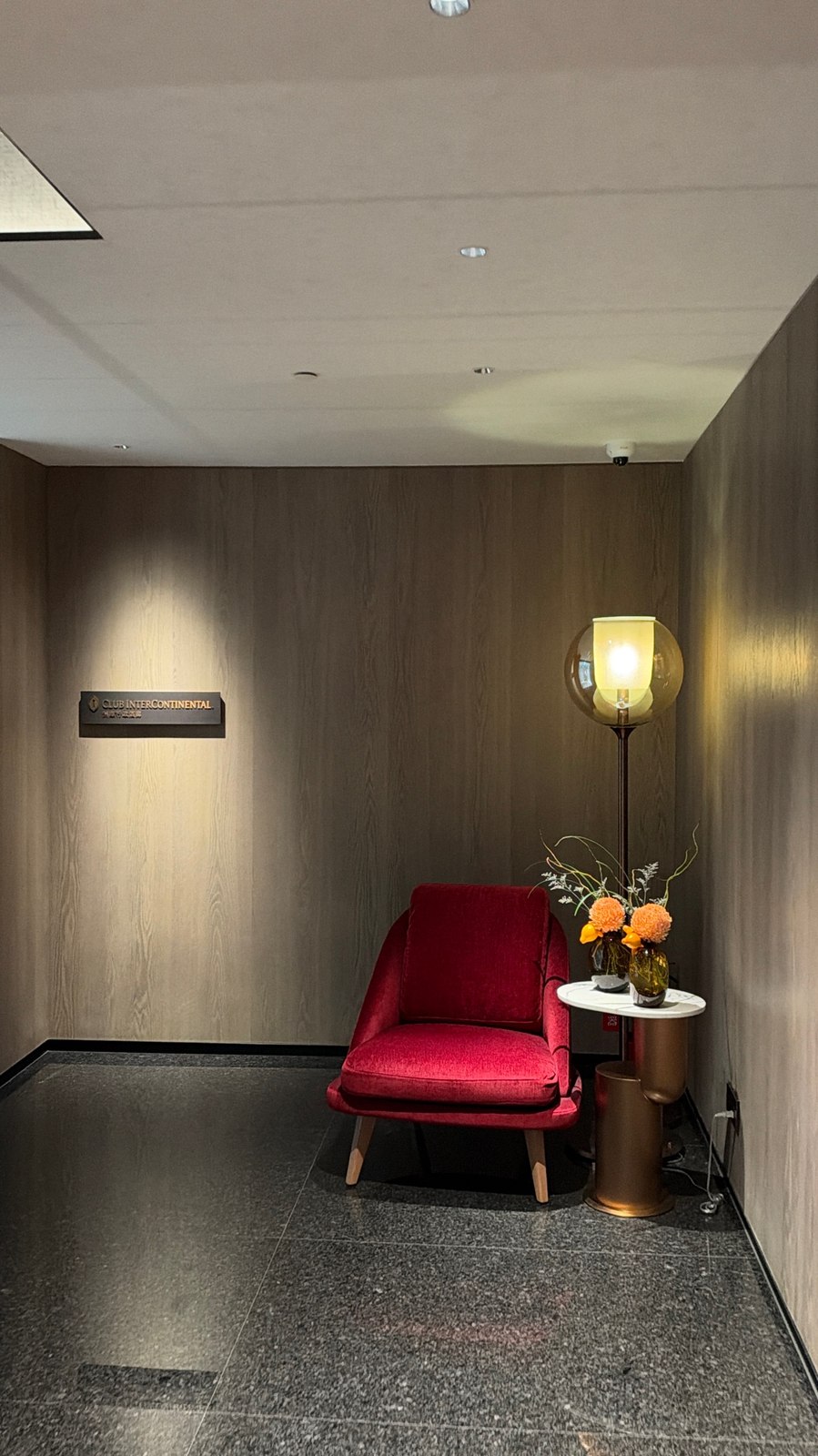
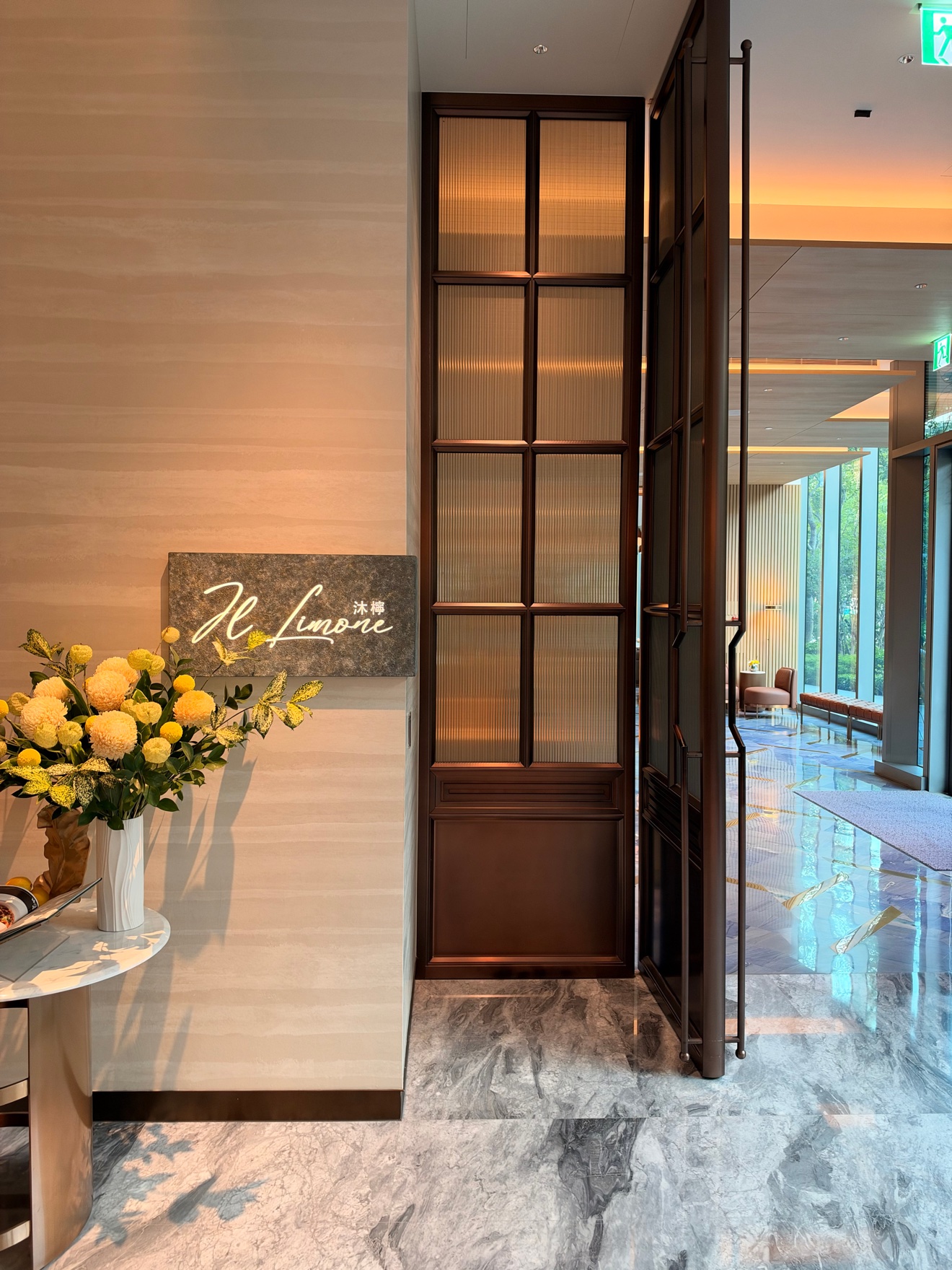
The entrance is kept understated: a small CLUB INTERCONTINENTAL sign on the wood-panelled wall, and beside it a red velvet armchair, glowing just enough. I like an opening like this — it is in no hurry to prove itself; it simply slows the pace first, the way you set a bookmark in place before opening a book.
A Space Left to the Light
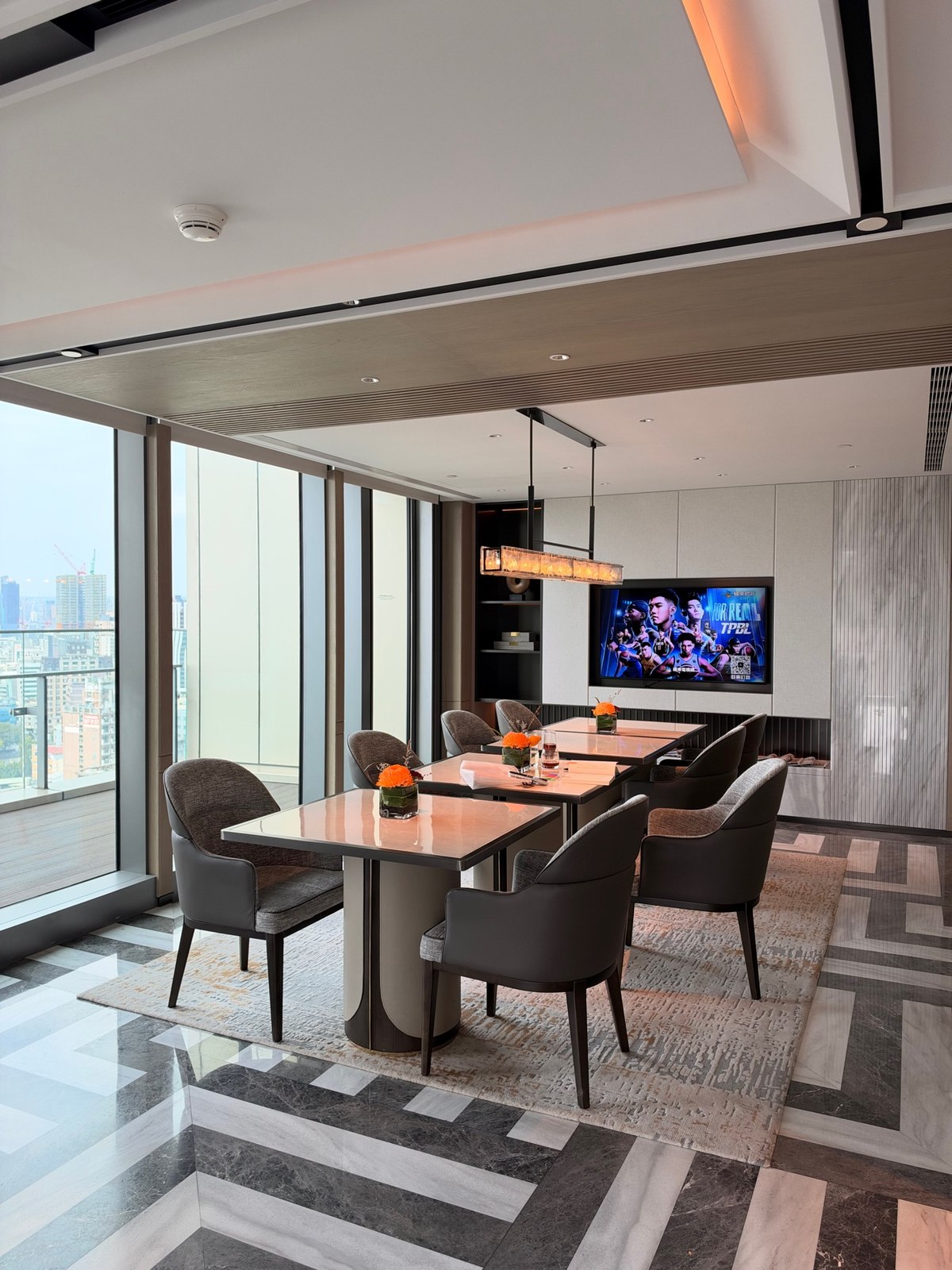
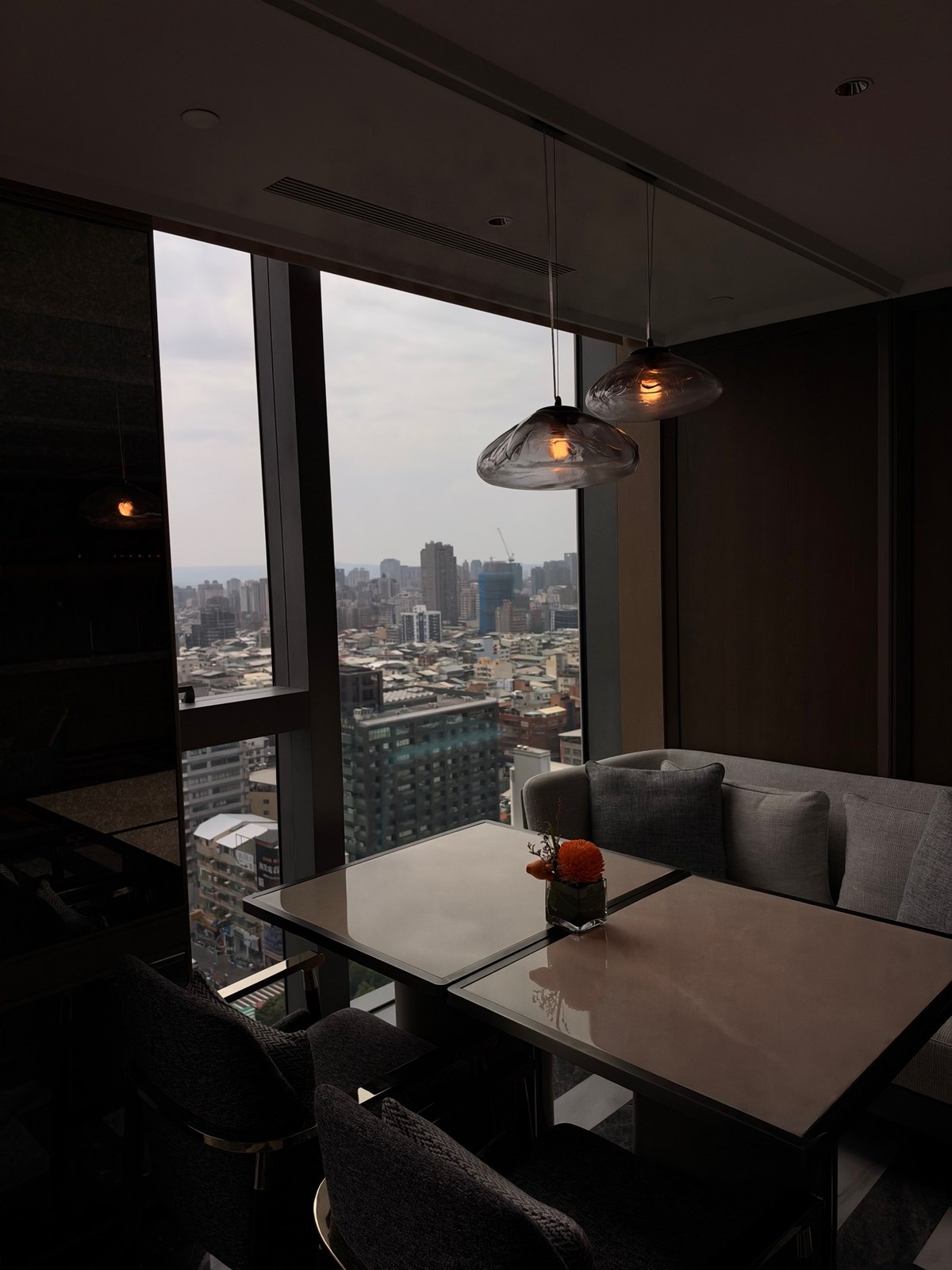
Past the entrance, the space unfolds along the floor-to-ceiling windows. A row of square tables lines the glass, each holding a small vase of orange flowers; underfoot is marble flooring in a black-and-white geometric pattern, and the light bands in the ceiling glow gently, never glaring. The palette is restrained — dark wood, mist grey, cream white — and the only brightness is that small cluster of orange on every table, as if to keep reminding you: quiet does not mean dull.
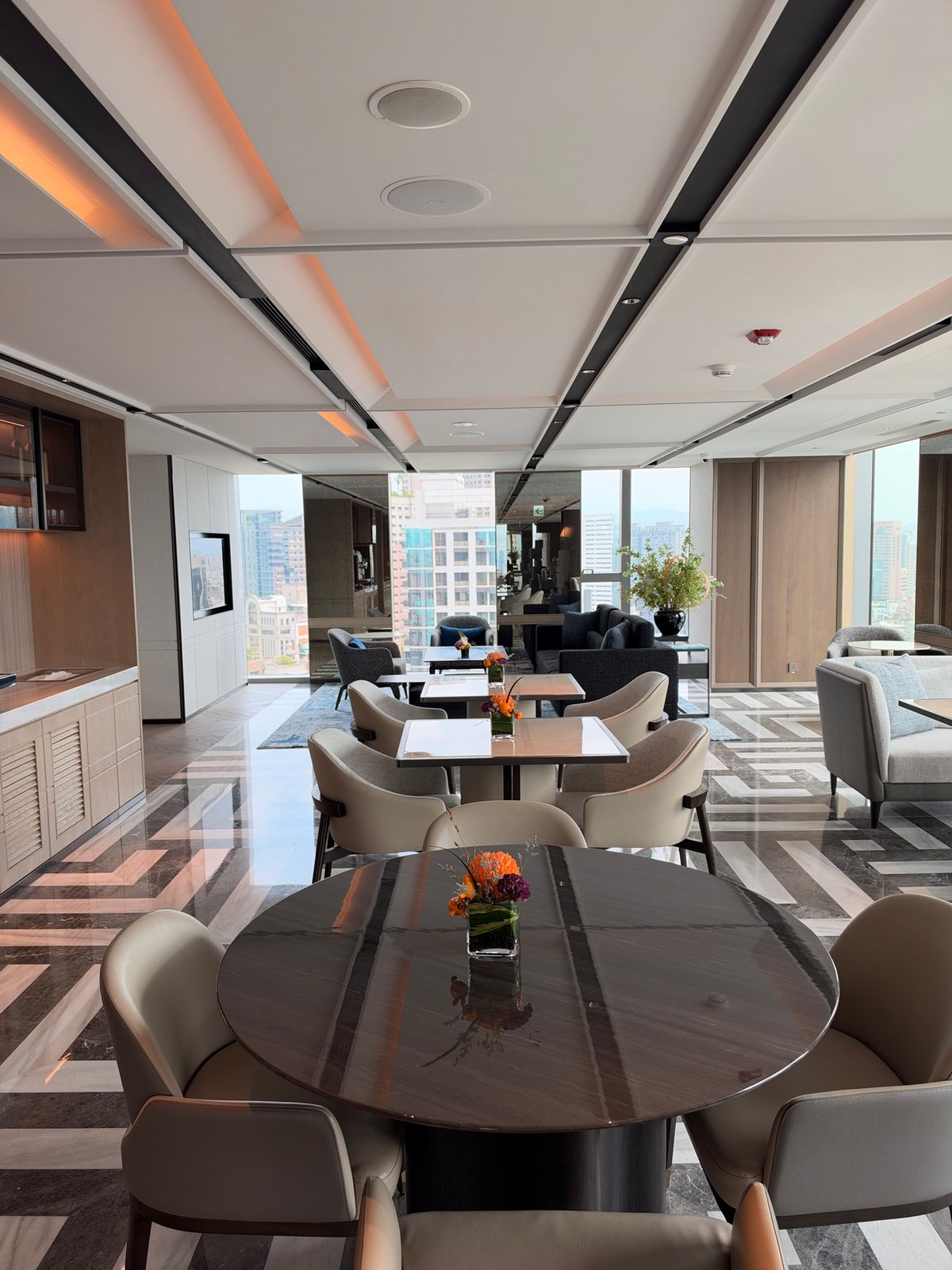
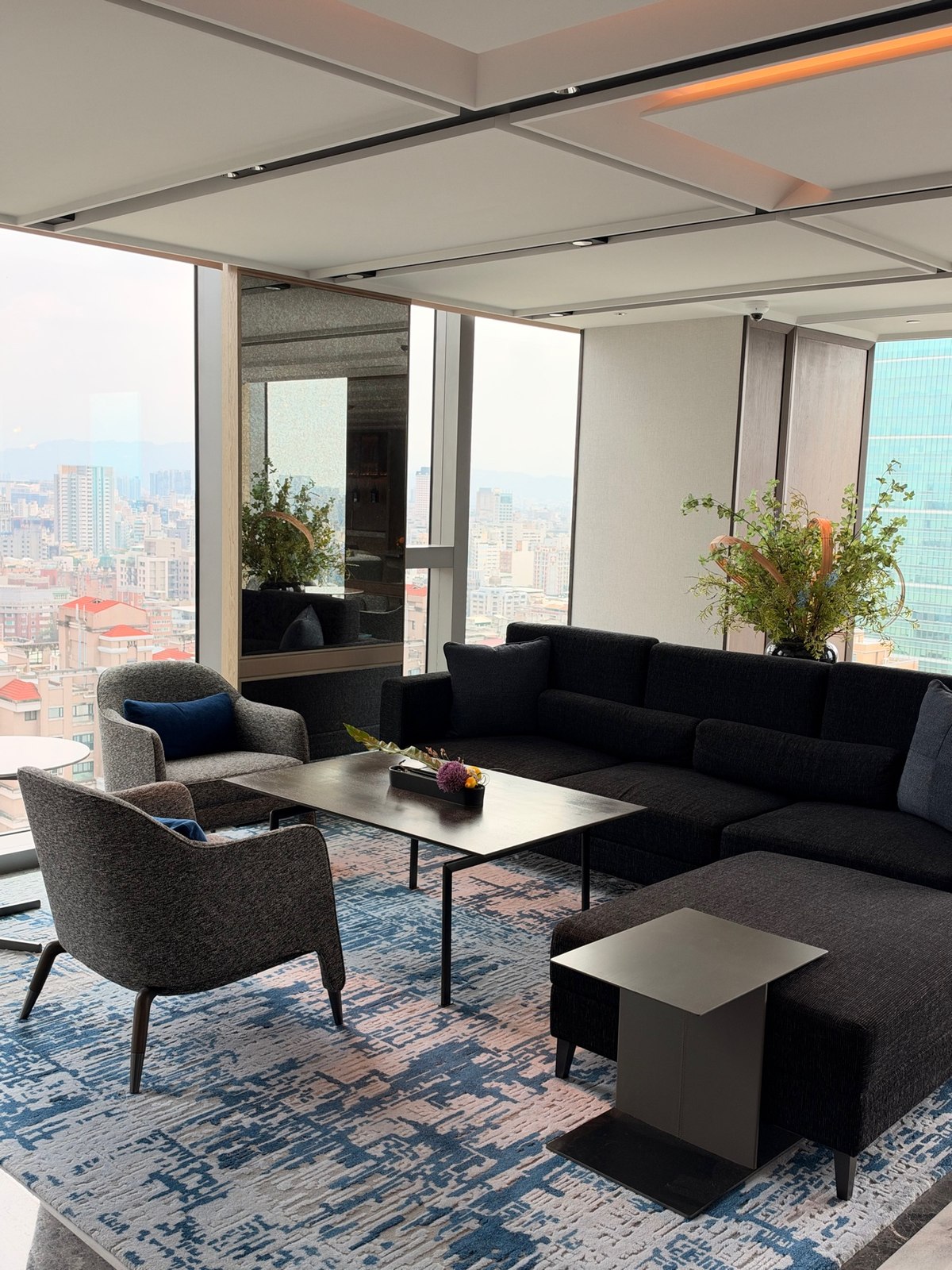
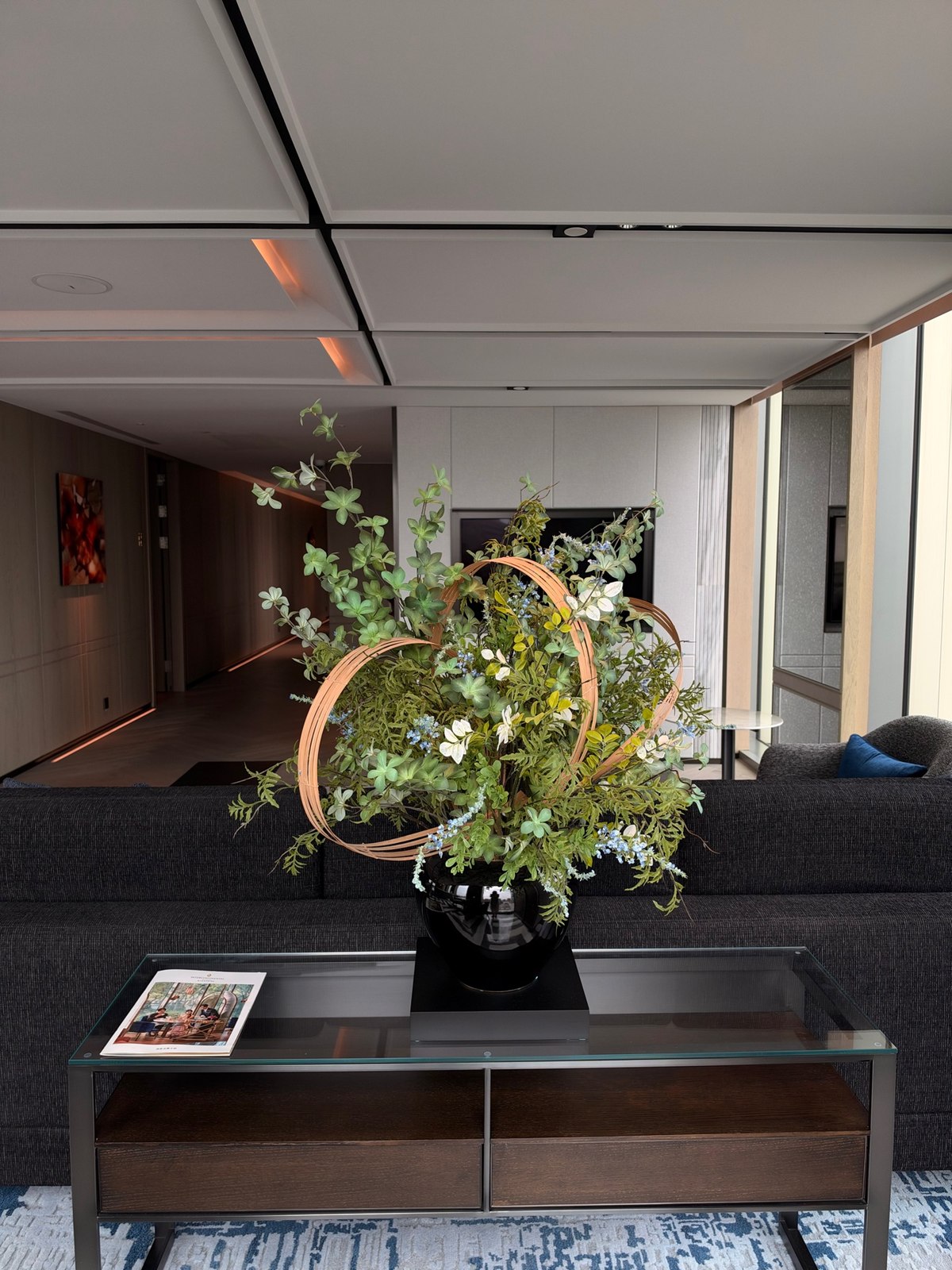
Further in, the seating takes on several characters: square tables for sitting down properly to a meal or a conversation; dark round tables ringed by four or five chairs, suited to a few close friends; and deepest of all, the sofa area — composed deep grey with a touch of navy, over a blue-patterned carpet, as though the sound of voices had been turned down one more level. I lingered longest at the round tables — dark wood grain reflecting the window light and the shadows of flowers; sitting down, it felt as if time itself had been polished a little brighter.
Small Kindnesses on the Long Counter
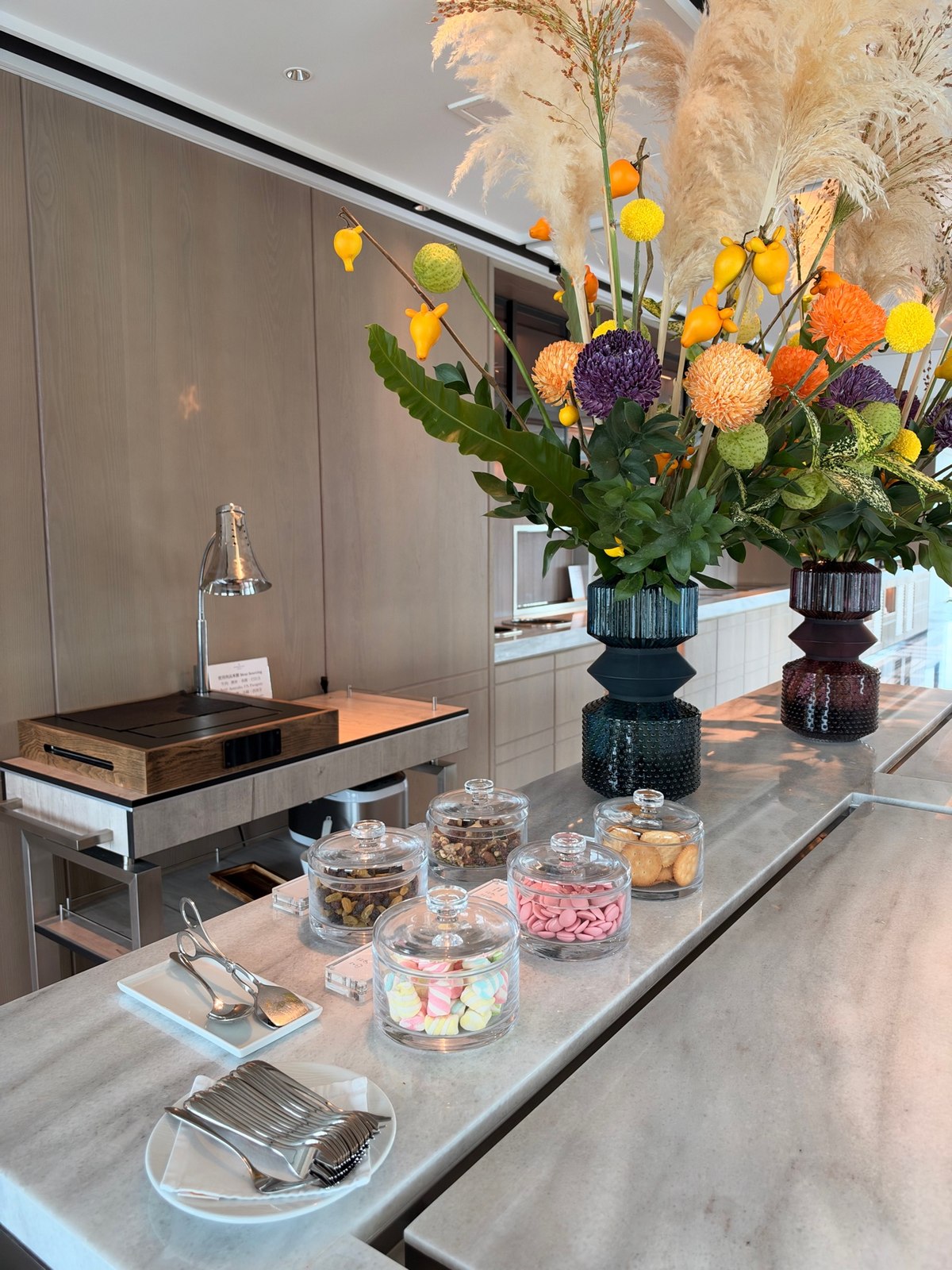
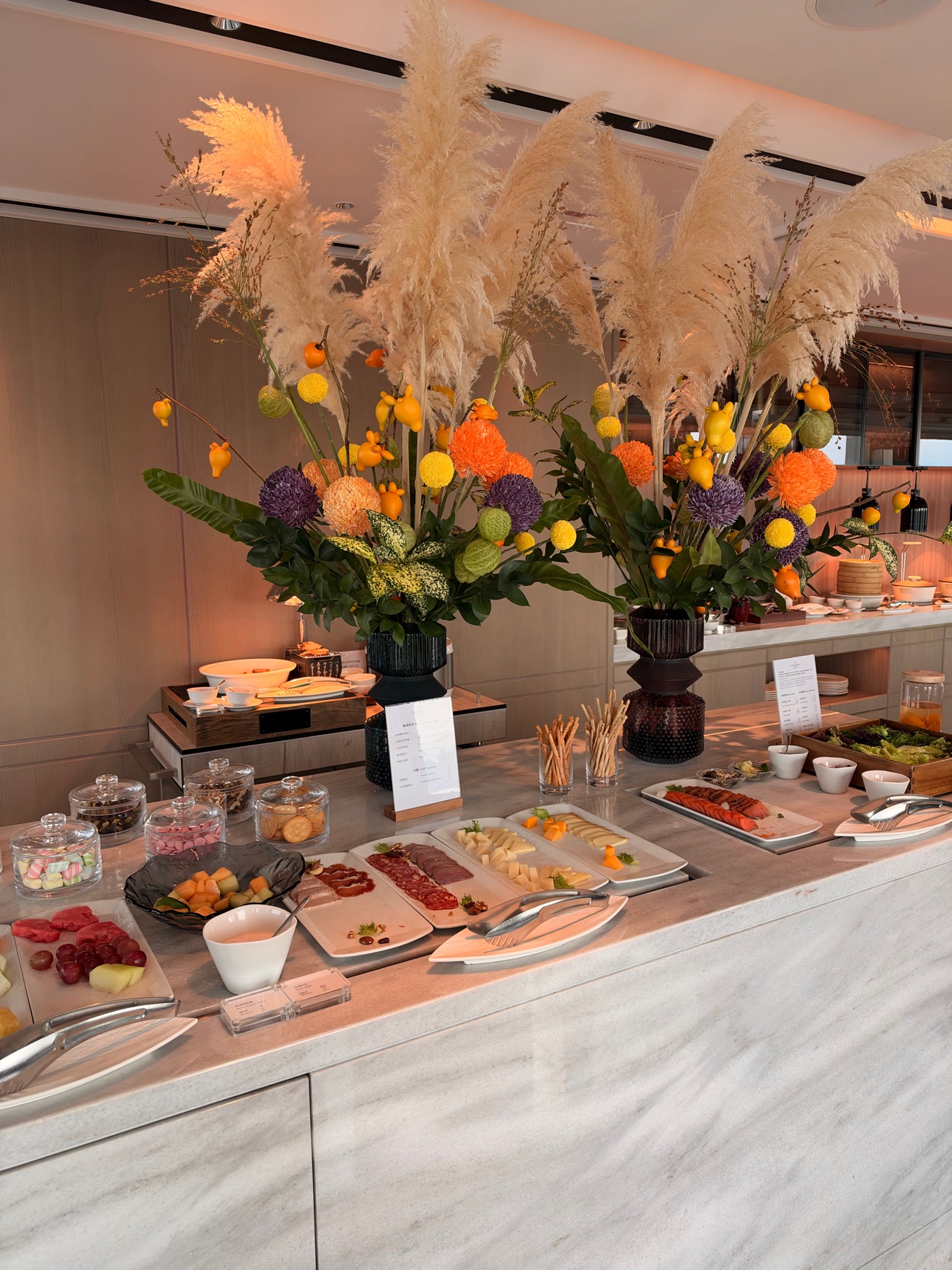
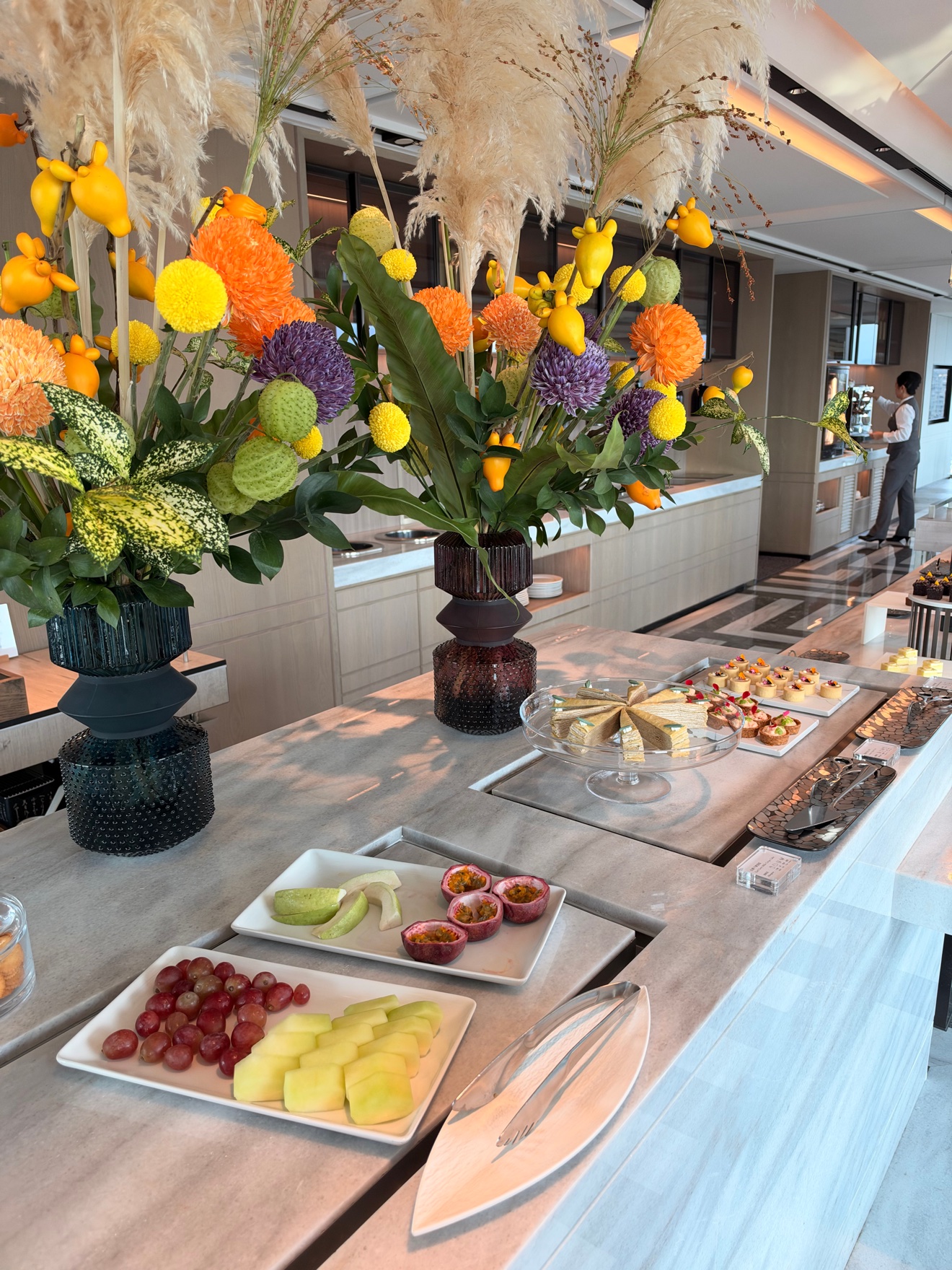
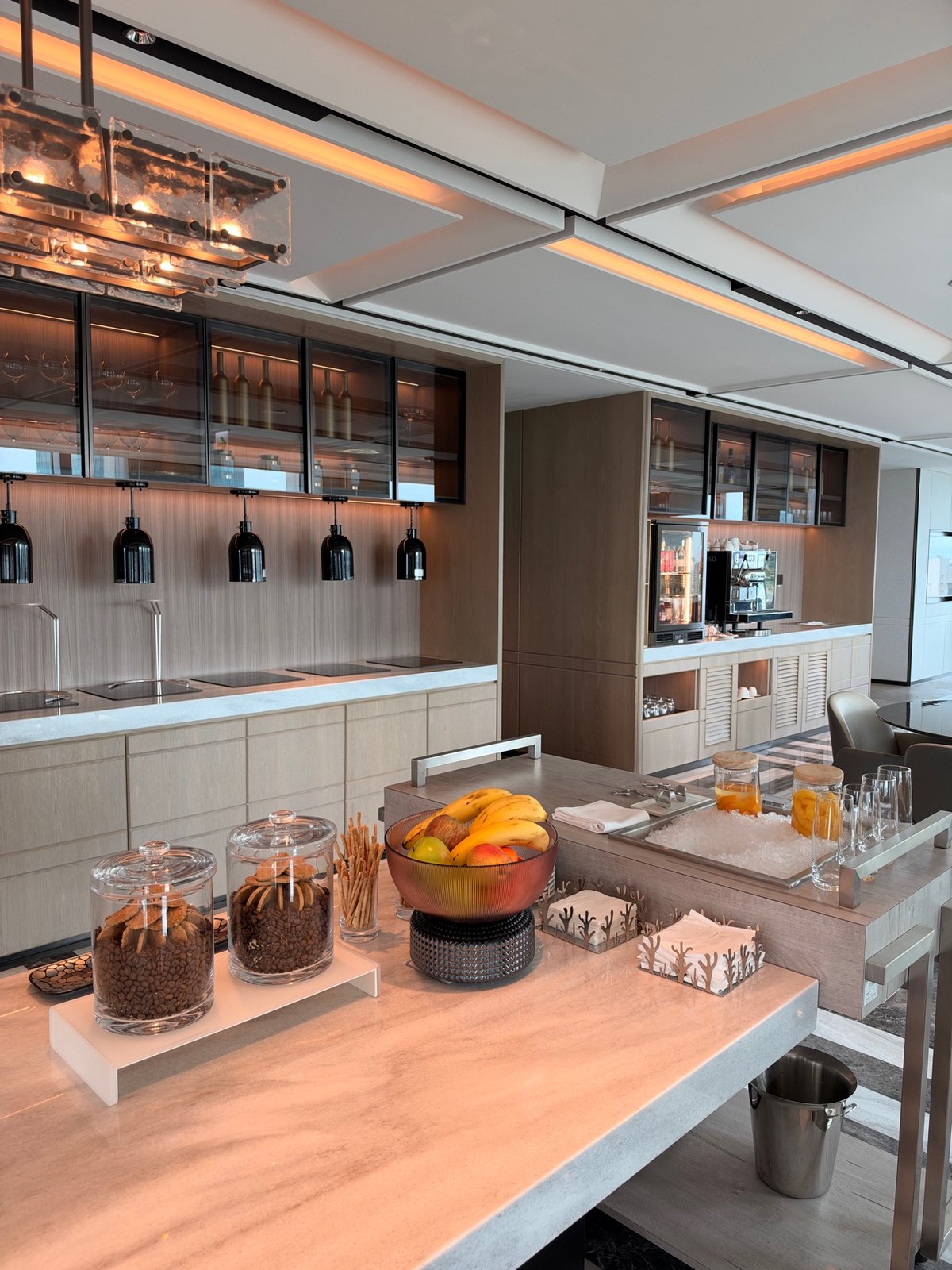
At the centre of the space runs a long marble counter, the floral arrangement standing tall upon it — chrysanthemums, silver grass, and small fruits in thoroughly autumn colours. In front of the flowers sits a row of glass jars: marshmallows, pink candies, biscuits, nuts and dried fruit. None of it is anything grand, yet it makes you think of childhood — it turns out that thoughtfulness in the grown-up world is sometimes simply a candy jar placed within arm's reach.
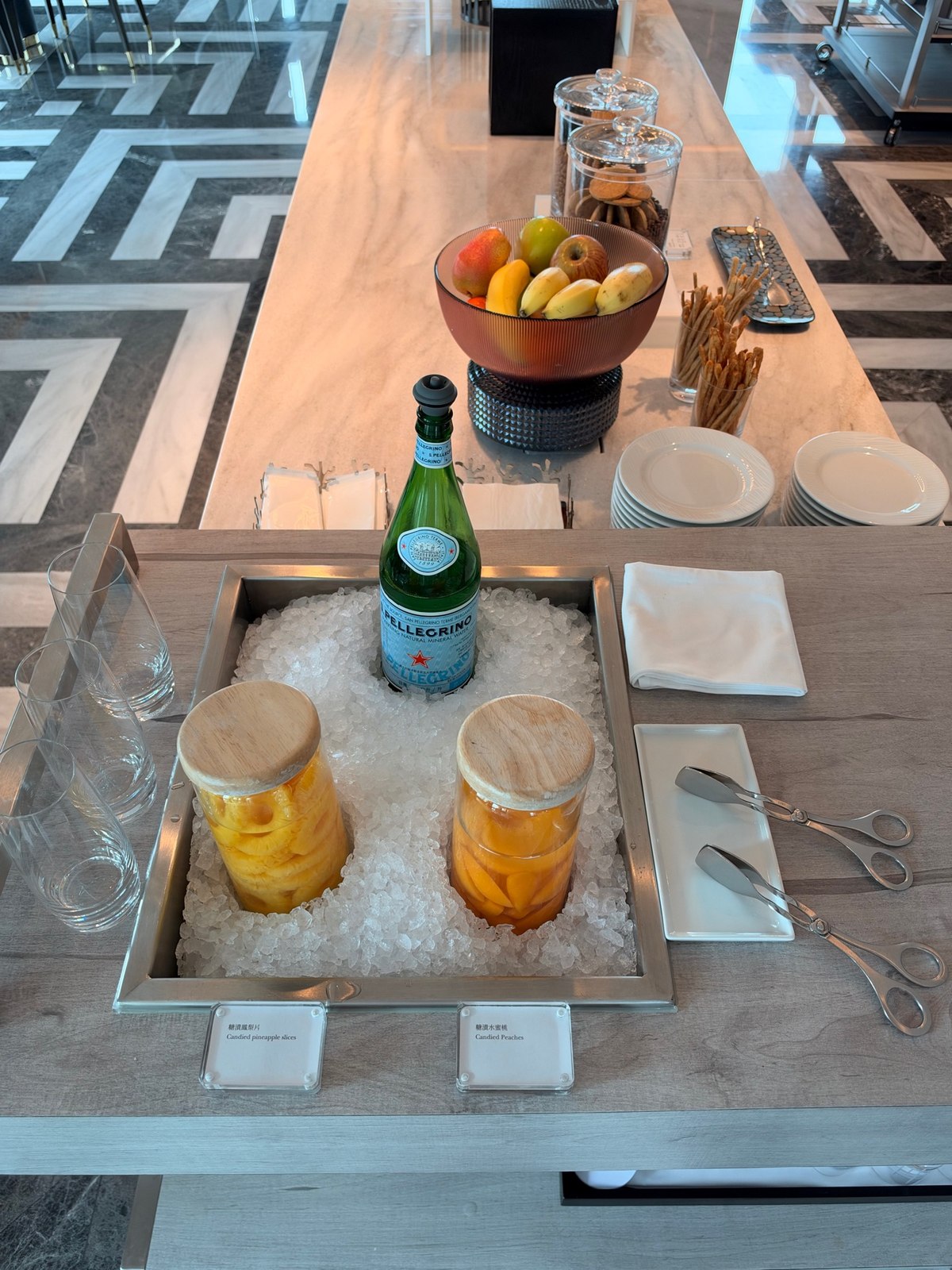
When I visited, breakfast had just been cleared and afternoon tea had not yet begun — the quietest lull in the lounge's day. On the counter at that hour were the all-day light refreshments: slices of candied pineapple and candied peaches kept chilled, whole fruits, biscuits and breadsticks, and a cold bottle of sparkling water. Nothing showy, yet everything said the same thing: take your time; there is no hurry here.
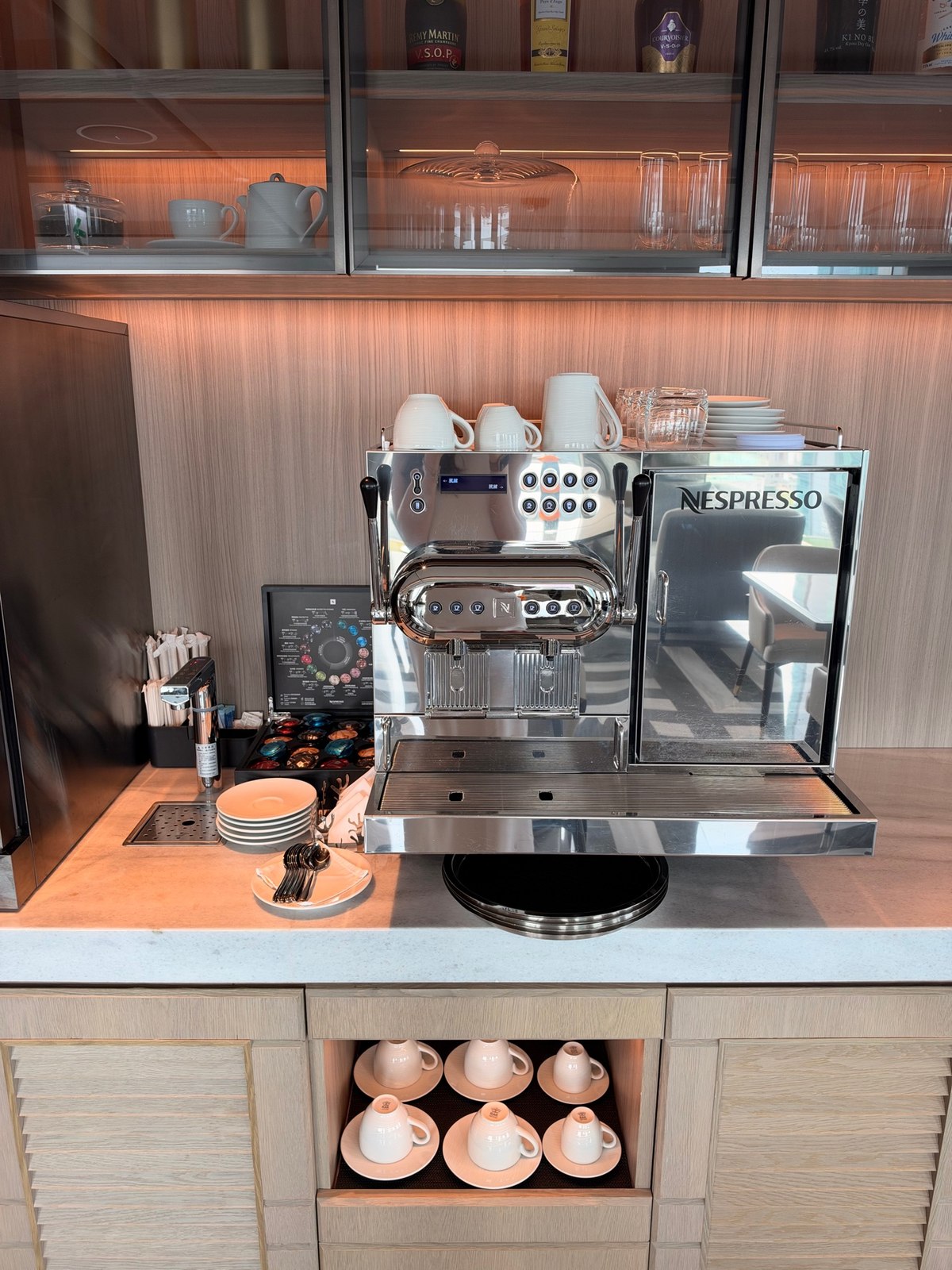
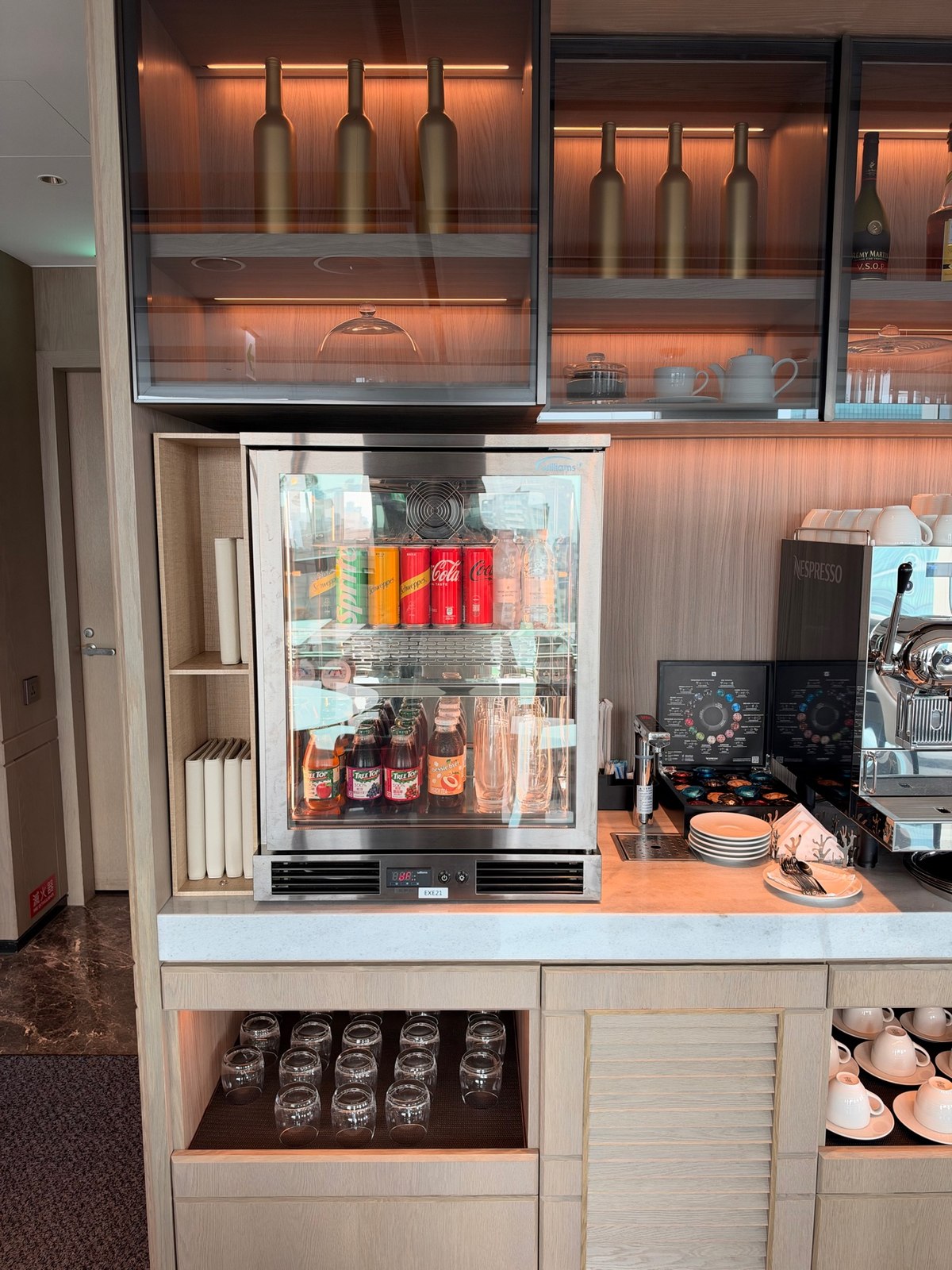
The drinks counter to one side is complete: soft drinks, juices, and bottled water in the refrigerator, the coffee machine and a full box of capsules standing by. I did not count the flavours; the arrangement simply felt like a considerate host — whatever you might like to drink, he has already thought of it for you.
Opening the Tea Menu, Meeting Taiwan
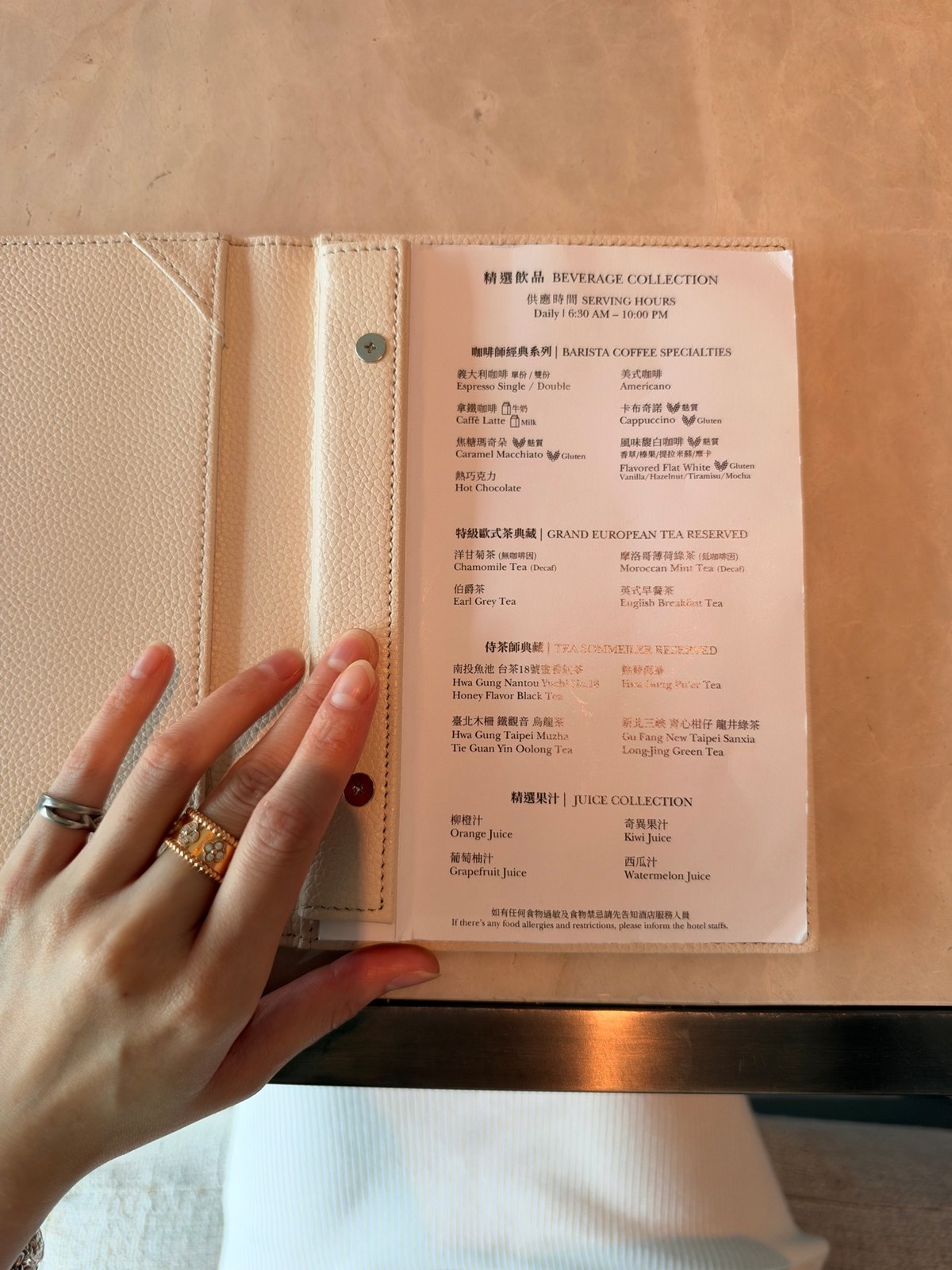
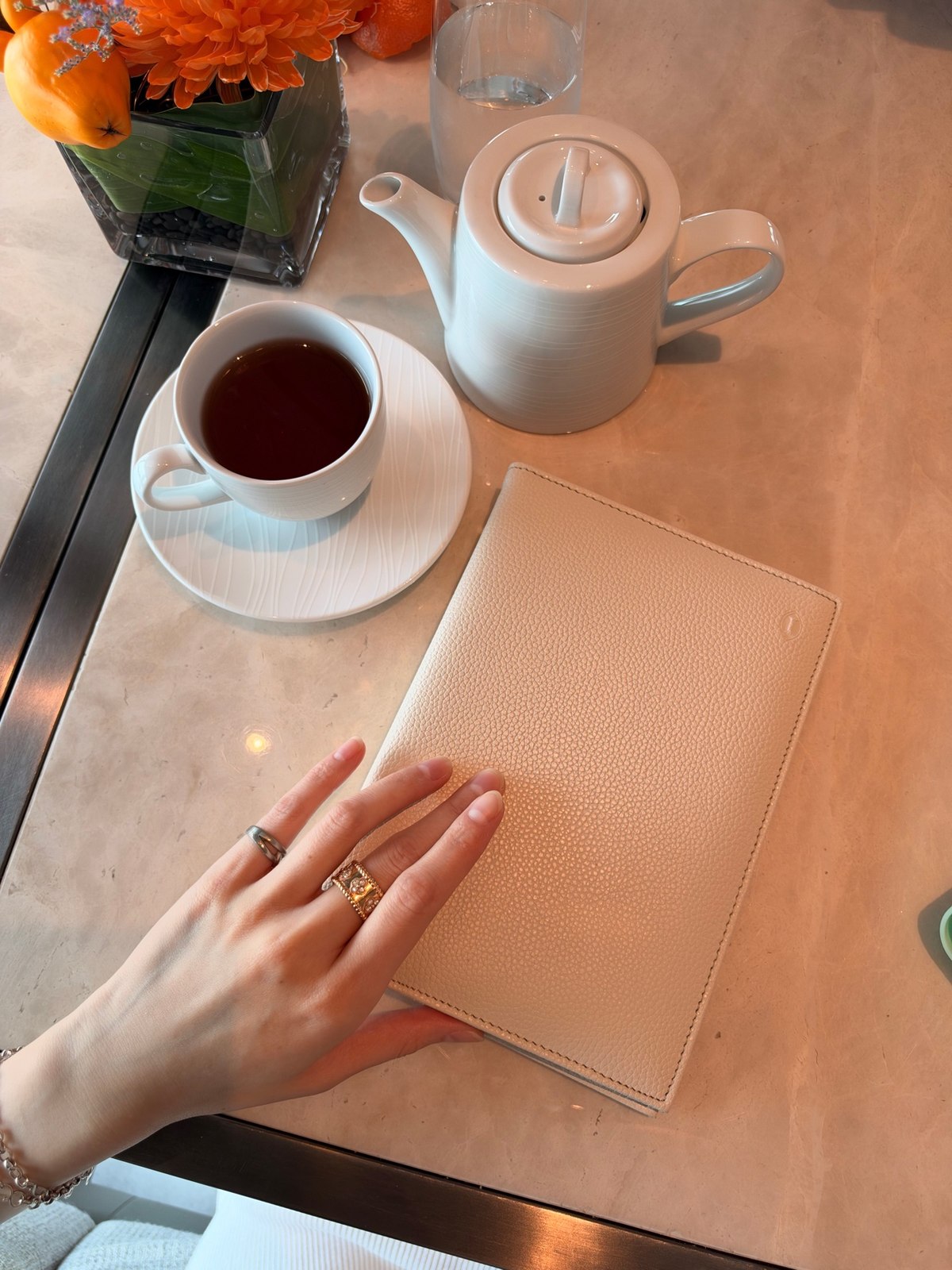
What I ordered that day was a pot of pu-erh. The liquor was deep and dark; drinking slowly, my heart slowed down along with it.
But as I turned the pages of the drinks menu, my eyes lingered a little longer on that 'Tea Sommelier's Collection' column — Tieguanyin from Muzha, green tea from Sanxia, and Taiwan Tea No. 18 from Yuchi in Nantou. In the lounge of an international hotel, to see Taiwanese teas listed with such seriousness was a quiet joy. So, over this pot of pu-erh, let me introduce you to the 'No. 18' on the menu —
A Short Note on Taiwanese Tea: First the Number, Then the Aroma
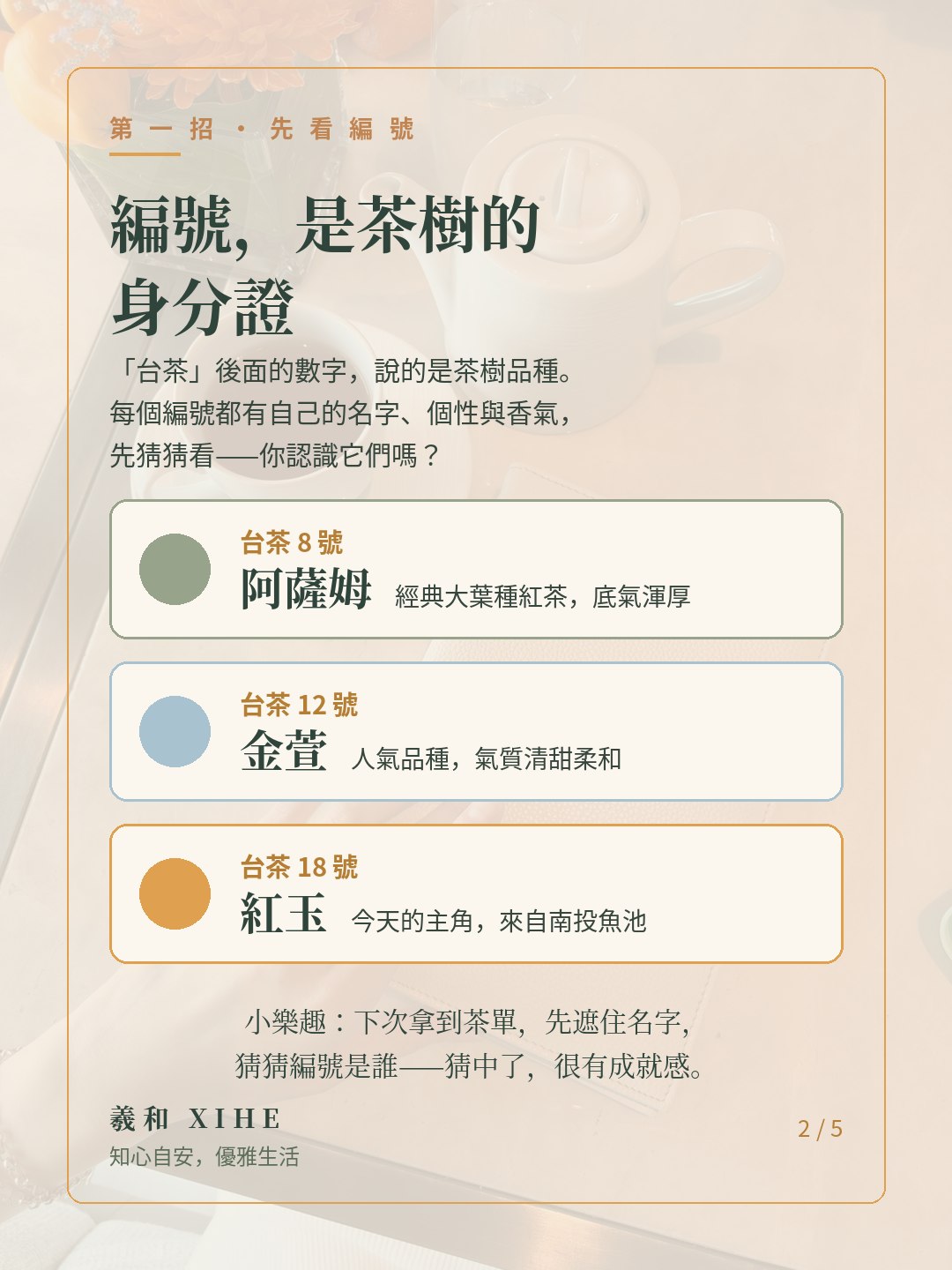
Have you ever noticed that the number after 'Taiwan Tea' is, in effect, the tea cultivar's identity card number?
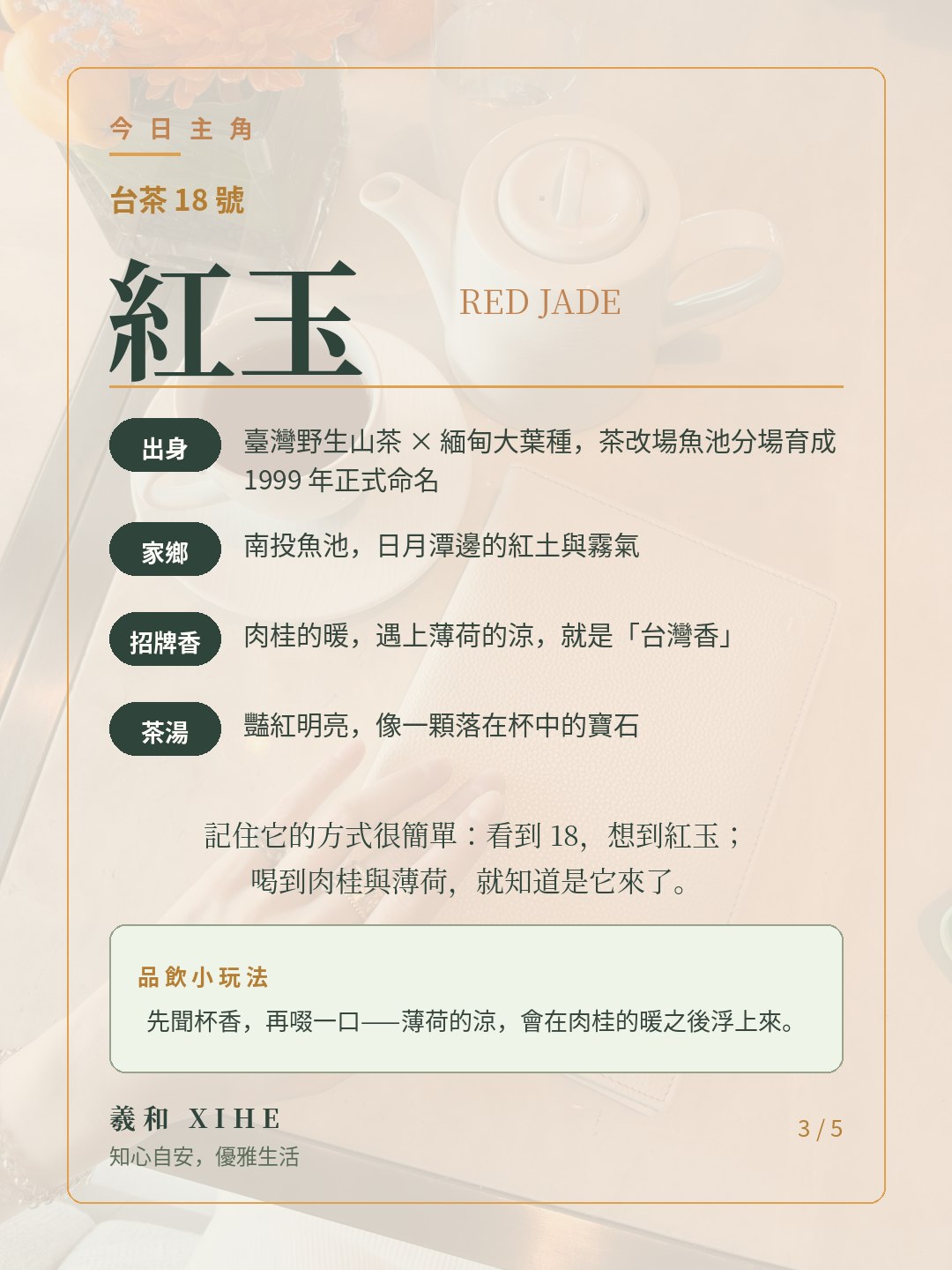
Taiwan's tea cultivars are bred and numbered by the Tea and Beverage Crops Research Station of the Ministry of Agriculture: Taiwan Tea No. 8 is Assam, No. 12 is the familiar Jin Xuan, and No. 18 carries a beautiful name — Ruby Red (Hong Yu).
Ruby Red was bred at the Station's Yuchi branch and formally named in 1999. One of its parents is Taiwan's wild mountain tea, the other a large-leaf tea from Myanmar; that lineage gives it both the backbone of the wild hills and a rich, full aroma. Its signature flavours are a natural cinnamon fragrance and a cooling hint of mint, and its liquor is a bright, vivid red — which is why some also call it the 'Fragrance of Taiwan'. Next time you see No. 18 on a tea menu, lift the cup and breathe in at the rim — the warmth of cinnamon arrives first; the cool of mint follows close behind.
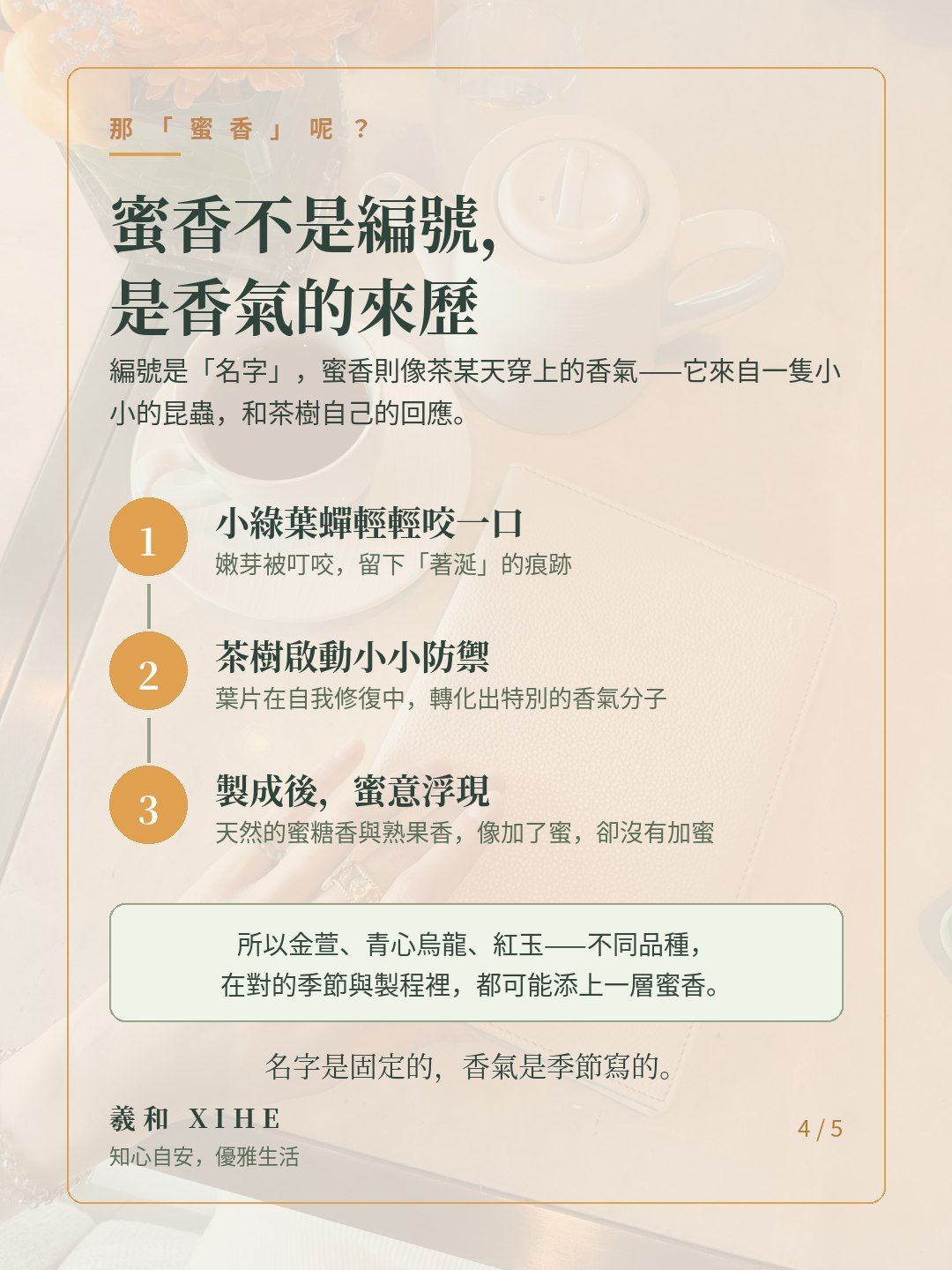
Another word that often appears alongside is 'honey aroma' (mixiang). Honey aroma is not a cultivar but a story: the tender buds are gently bitten by the tea green leafhopper — tea people call it 'touched by saliva' — and as the plant heals itself, the leaves quietly develop a fragrance like honey, like ripe fruit. So honey aroma can appear in many cultivars — Jin Xuan can have it, Qingxin Oolong can have it, and in the right season Ruby Red can wear a layer of honey, too.
Put simply: the number is who it is; the honey aroma is what it has been through. The name is fixed, but the fragrance is written by the season. Once you know this, every tea menu you open is like meeting a new friend.
I have also made this little note into five illustrated cards, placed here — if you like them, feel free to save them and share them with friends who love tea as much as you do.
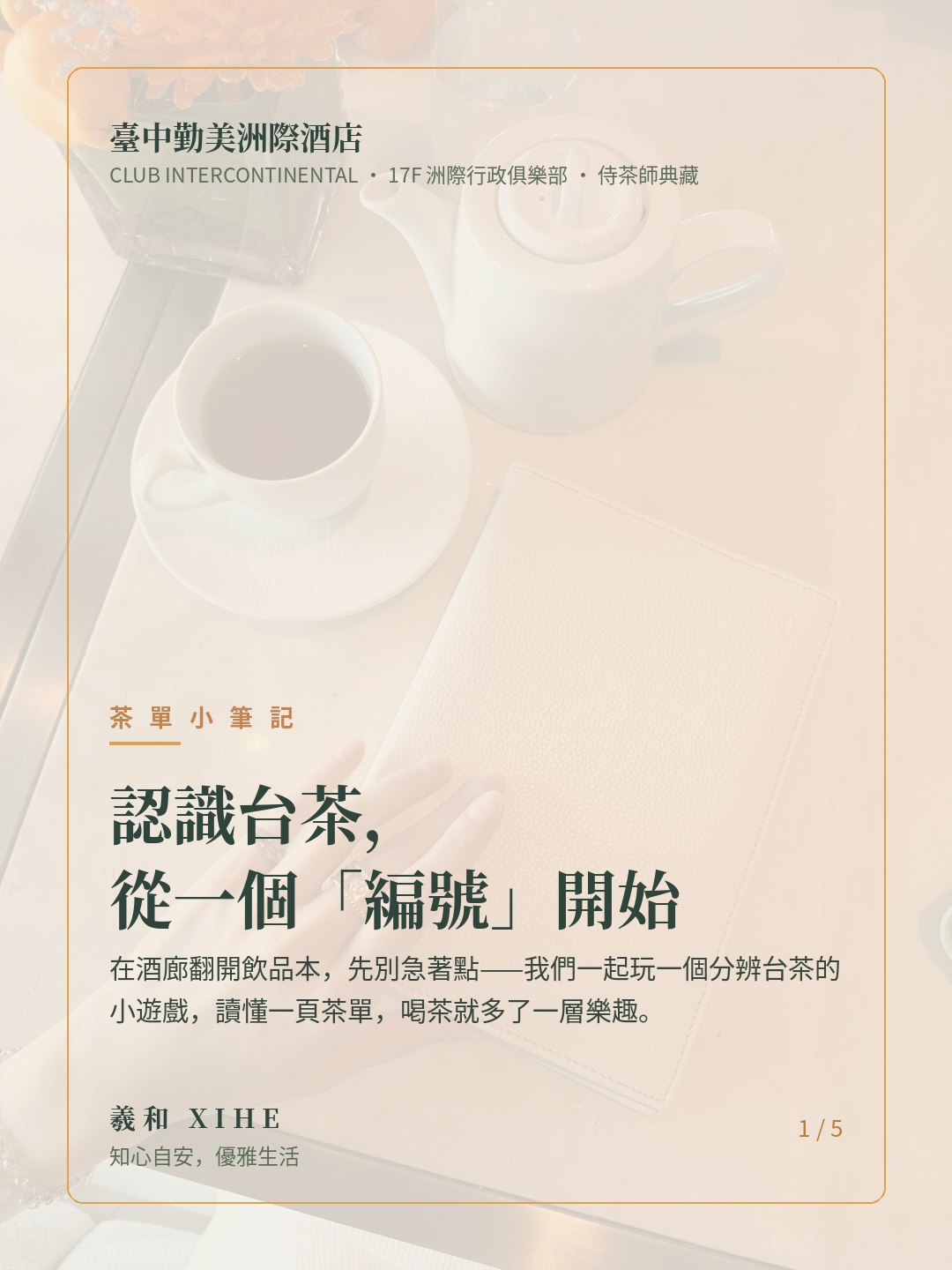
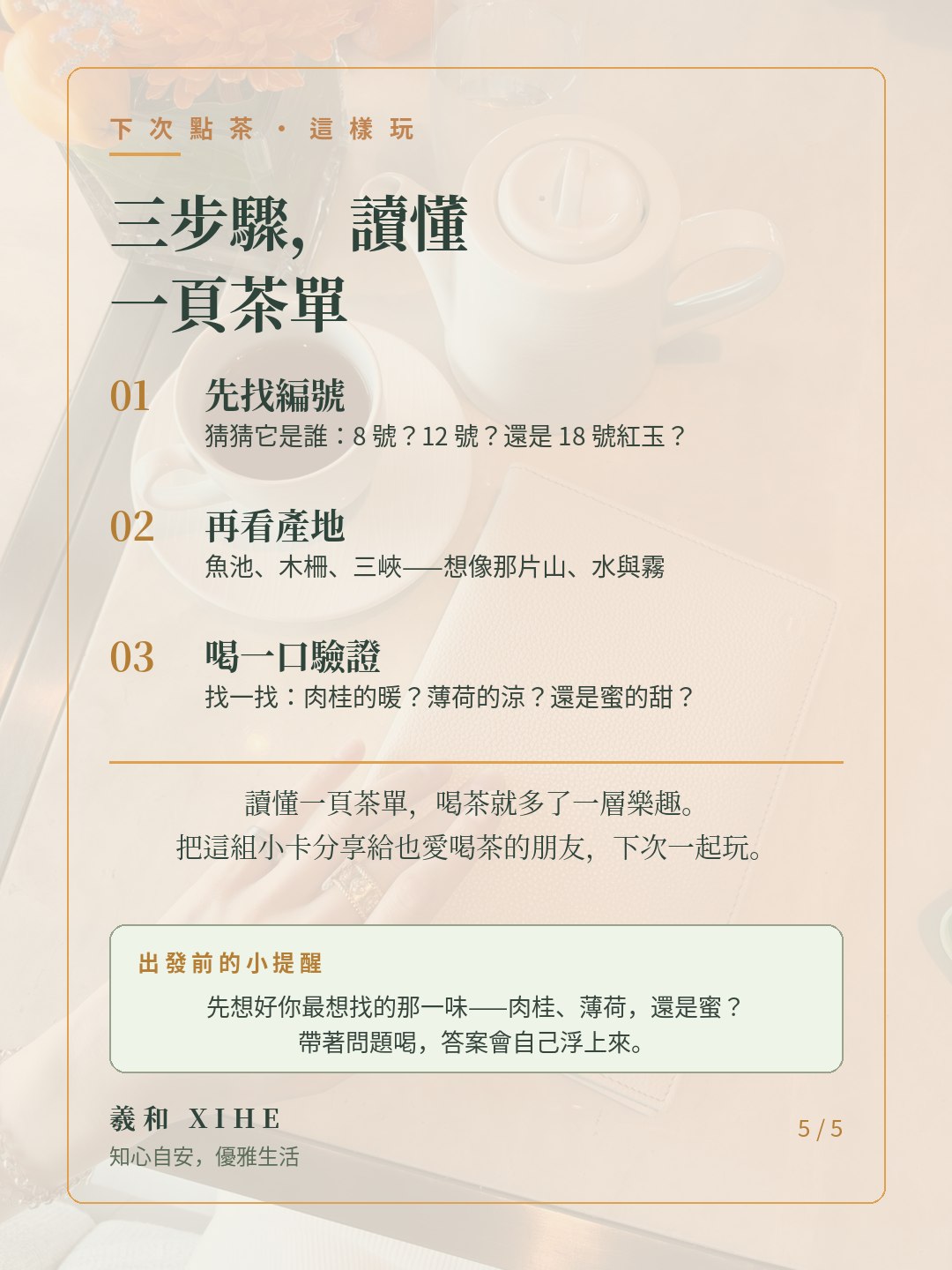
Next time I come, I want to order a pot of Ruby Red on purpose, and slowly go looking for that cinnamon and mint. For this day, this was enough — pu-erh in hand, and a new friend from the tea menu left waiting for another morning.
What Kind of Traveller Is a Space Like This For?
Later I thought: the most precious thing about an executive lounge is not really the food and drink, but that undisturbed margin of emptiness. Travellers with a loose itinerary can stop here for a cup of tea; those on business can find a window-side corner to answer letters and gather their thoughts — the tables are far apart and voices are low, so no one disturbs anyone; and those who dislike a bustling breakfast can begin their day slowly here. As for me, I can be made happy by a single line on a tea menu — and that is quite enough.
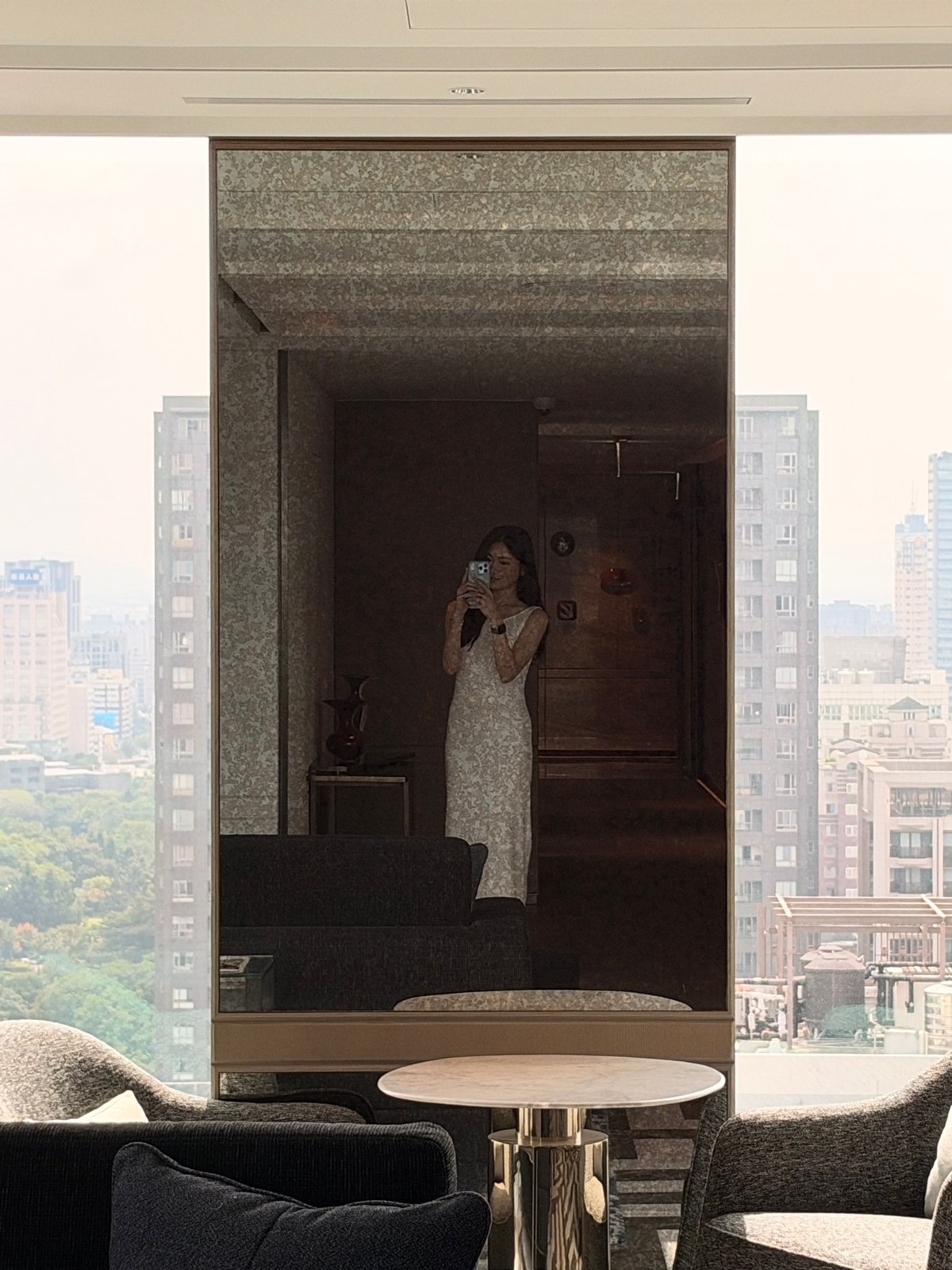
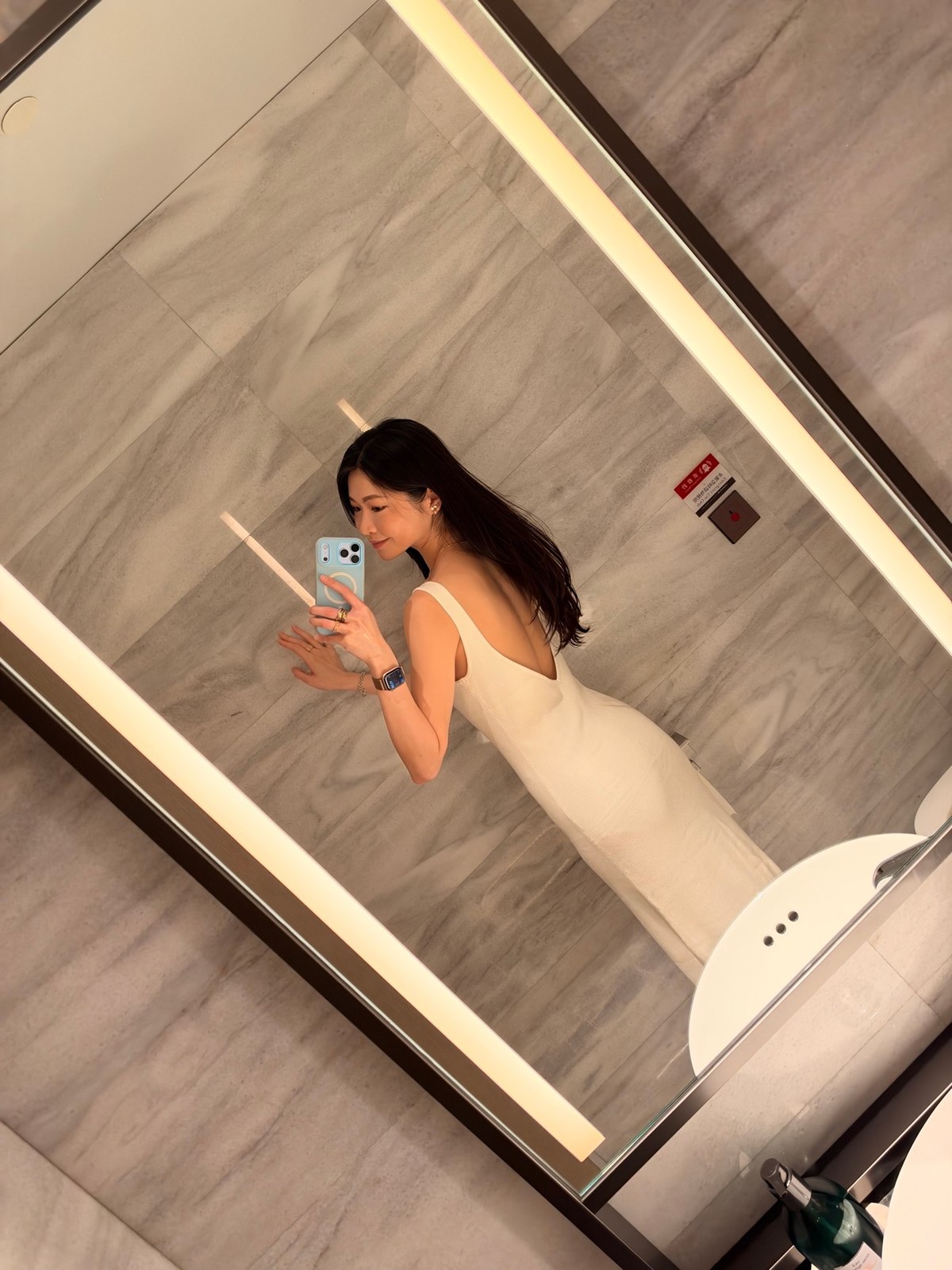
There is one more place I want to record — the lounge's restroom. Marble walls and warm light before the mirror; even the place for touching up one's makeup is perfectly quiet. Facing the mirror, I casually kept a portrait of myself from that day.
Practical Information (Hotel Arrangements — Please Confirm Again Before Your Visit)
Location: 17F, InterContinental Taichung — Club InterContinental
Opening hours: 06:30–22:30
Continental breakfast: 06:30–10:30
Afternoon tea: 14:30–16:30
Evening cocktails: 17:30–19:30
Drinks menu served: daily 06:30–22:00 (as marked on the menu on site)
Age limit: guests aged 16 and above
Access: depends on your booking plan and membership benefits; we recommend confirming with the hotel before booking
All photographs in this article were taken during the all-day light refreshments hours; breakfast, afternoon tea, and the evening cocktails are the hotel's scheduled services and were not experienced for this article.
In Closing
When I left, I passed the red chair at the entrance once more. It still sat quietly alone beneath the lamp, as if nothing had happened at all.
The rarest thing in travel is often not how far you have gone, but whether, in an unfamiliar city, you can find a place where you can settle yourself — one table, one pot of tea, one stretch of unhurried time. To live one's days at ease in heart and graceful in manner, it turns out, sometimes takes no more than a single morning, and a cup of tea drunk very slowly.