

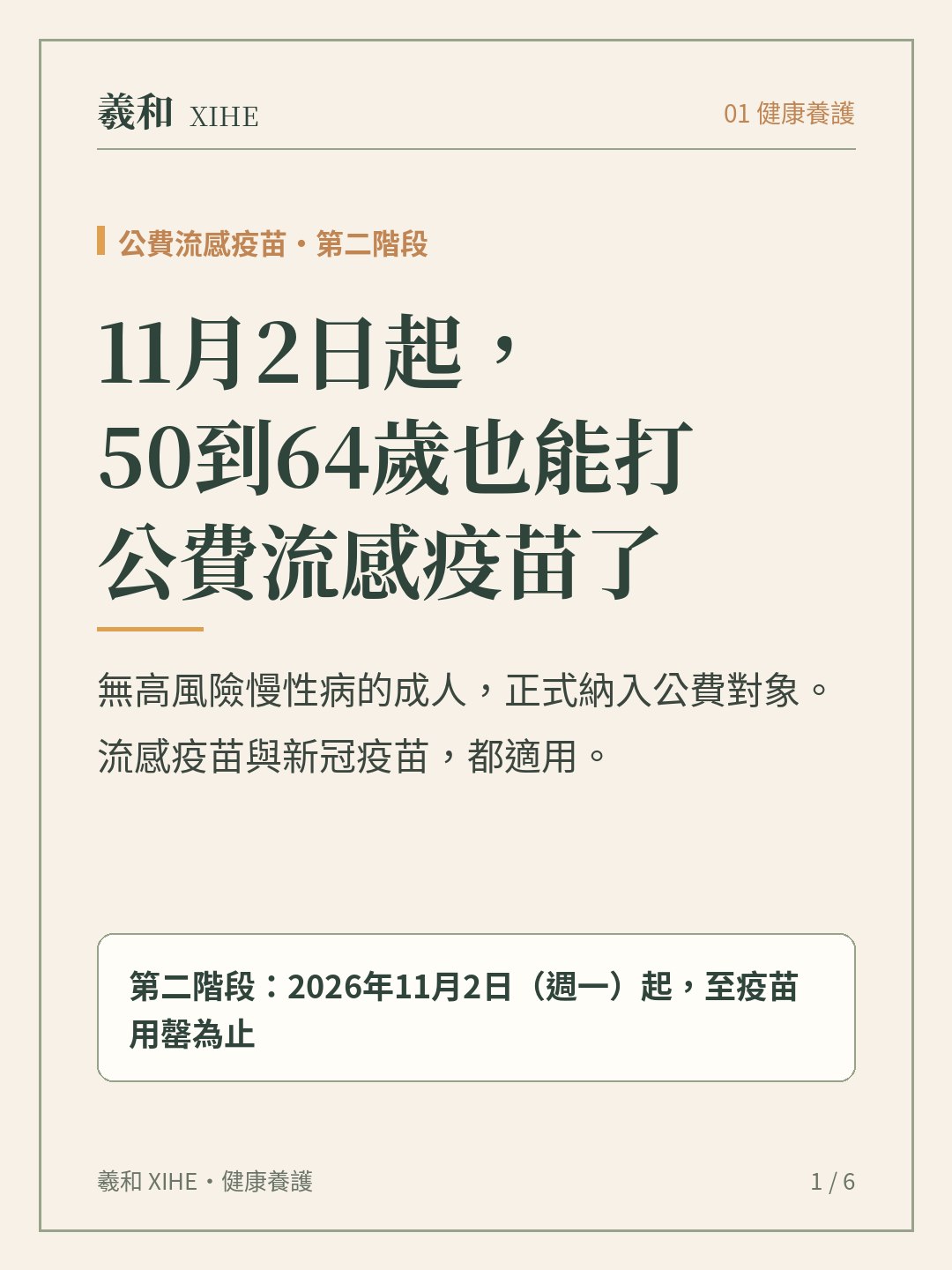
As the weather turns cooler, this flu season's vaccination program moves into its second phase. When Phase 1 began on October 1, adults aged 50 to 64 without high-risk chronic conditions were not yet on the list. From Monday, November 2, this age group is officially included in the publicly funded program. This article brings together who is eligible, how the enhanced vaccines are allocated, and what to prepare before you go.
1. The two phases, at a glance
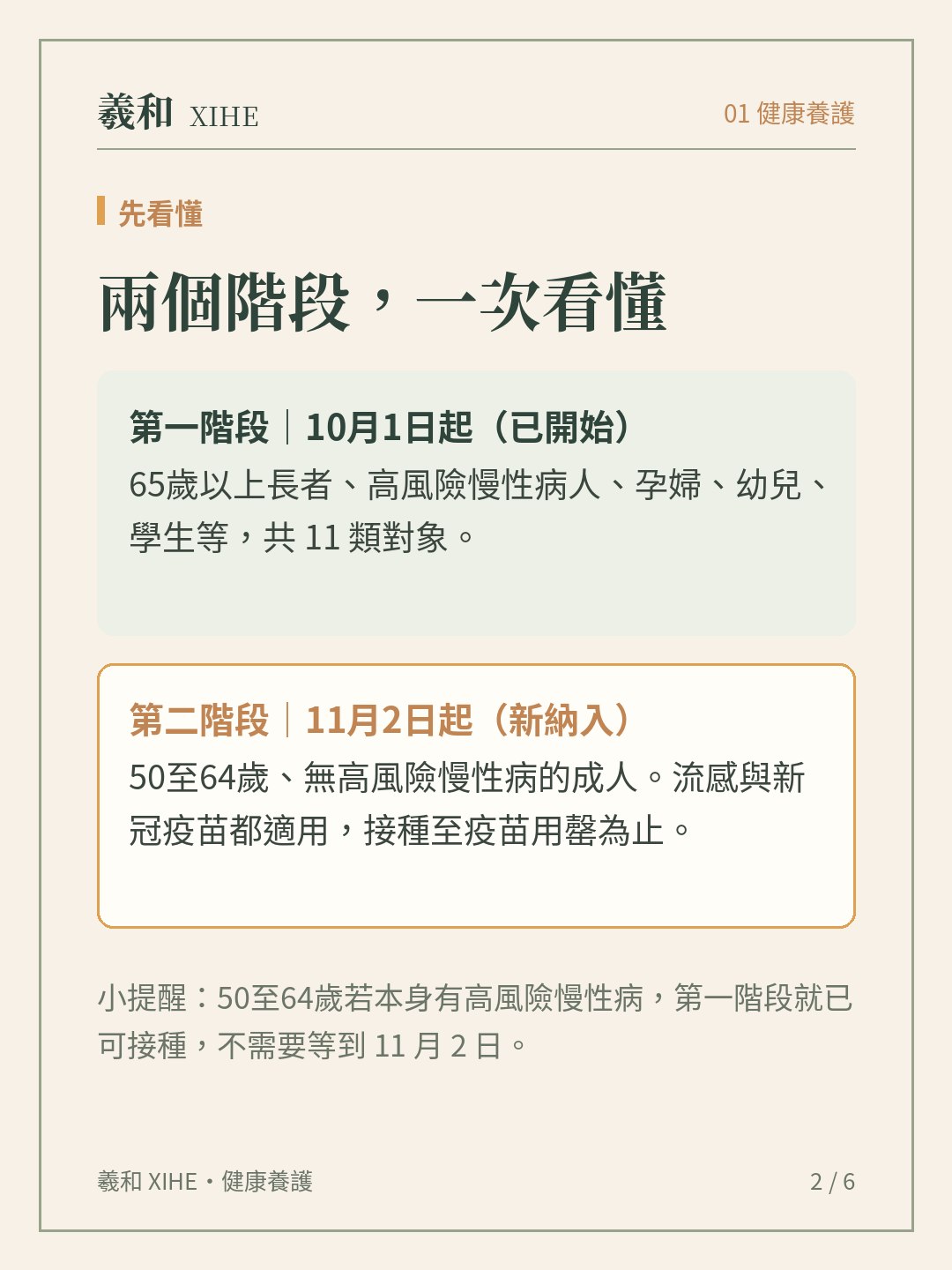
Phase 1: from October 1, 2026 (already under way). Eleven groups are eligible: adults 65 and older; Indigenous adults aged 55 to 64; residents and staff of nursing and long-term care institutions; children from 6 months of age up to before elementary school entry; pregnant women; people with underlying conditions (including high-risk chronic disease patients aged 19 to 64, BMI of 30 or above, rare diseases, and major illness or injury); parents or actual caregivers of infants under 6 months; kindergarten and childcare institution staff and home-based childcare providers; students from elementary school through high school and the first three years of five-year junior college; medical and public-health personnel; and workers in livestock-related and animal disease-prevention roles.
Phase 2: from November 2, 2026, until vaccine supplies run out. Newly eligible: adults aged 50 to 64 without high-risk chronic conditions. This applies to both the flu vaccine and the COVID-19 vaccine.
Note: if you are 50 to 64 and already qualify under a Phase 1 category, such as having a high-risk chronic condition, you could already be vaccinated in Phase 1 — there is no need to wait until November 2.
2. Enhanced vaccines: allocated by priority, not by choice
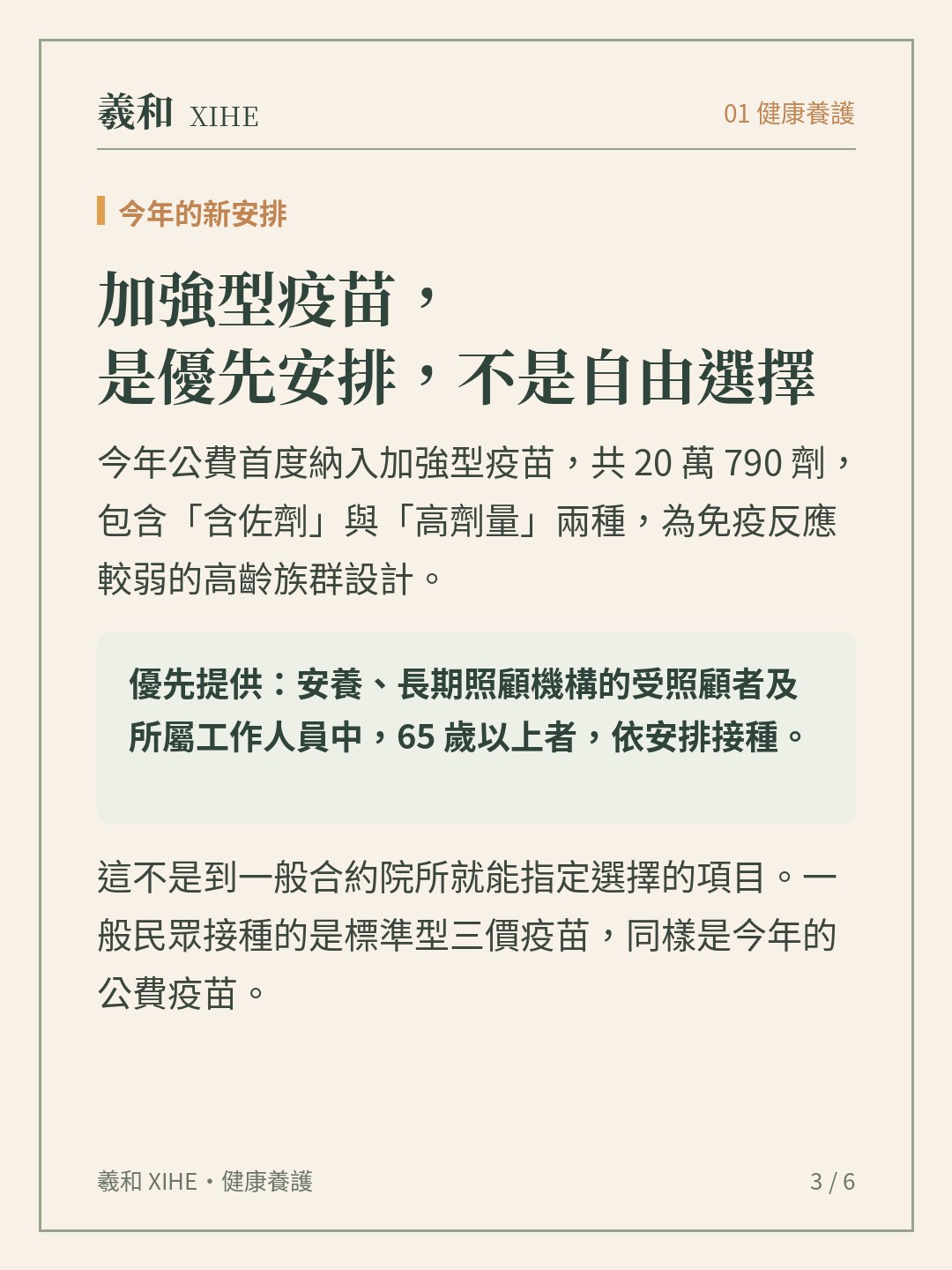
This year, the government procured 7,051,500 doses of flu vaccine in total, including 200,790 enhanced (immune-enhanced) doses, purchased by the Taiwan CDC for the first time. Enhanced vaccines come in two types — adjuvanted and high-dose — designed for older adults whose immune response is weaker.
Under the CDC's arrangement, enhanced vaccines are provided first to people aged 65 and over among residents and staff of nursing and long-term care institutions, vaccinated according to arrangements made by the institutions and health authorities; actual use must also meet each product's approved age. It is therefore not something you can walk into a regular contracted clinic and request by name.
Most eligible people receive the standard trivalent vaccine, which is equally part of this year's publicly funded program. There is no need to delay your own vaccination in order to wait for an enhanced vaccine.
3. The current situation: easing, but still in the epidemic period
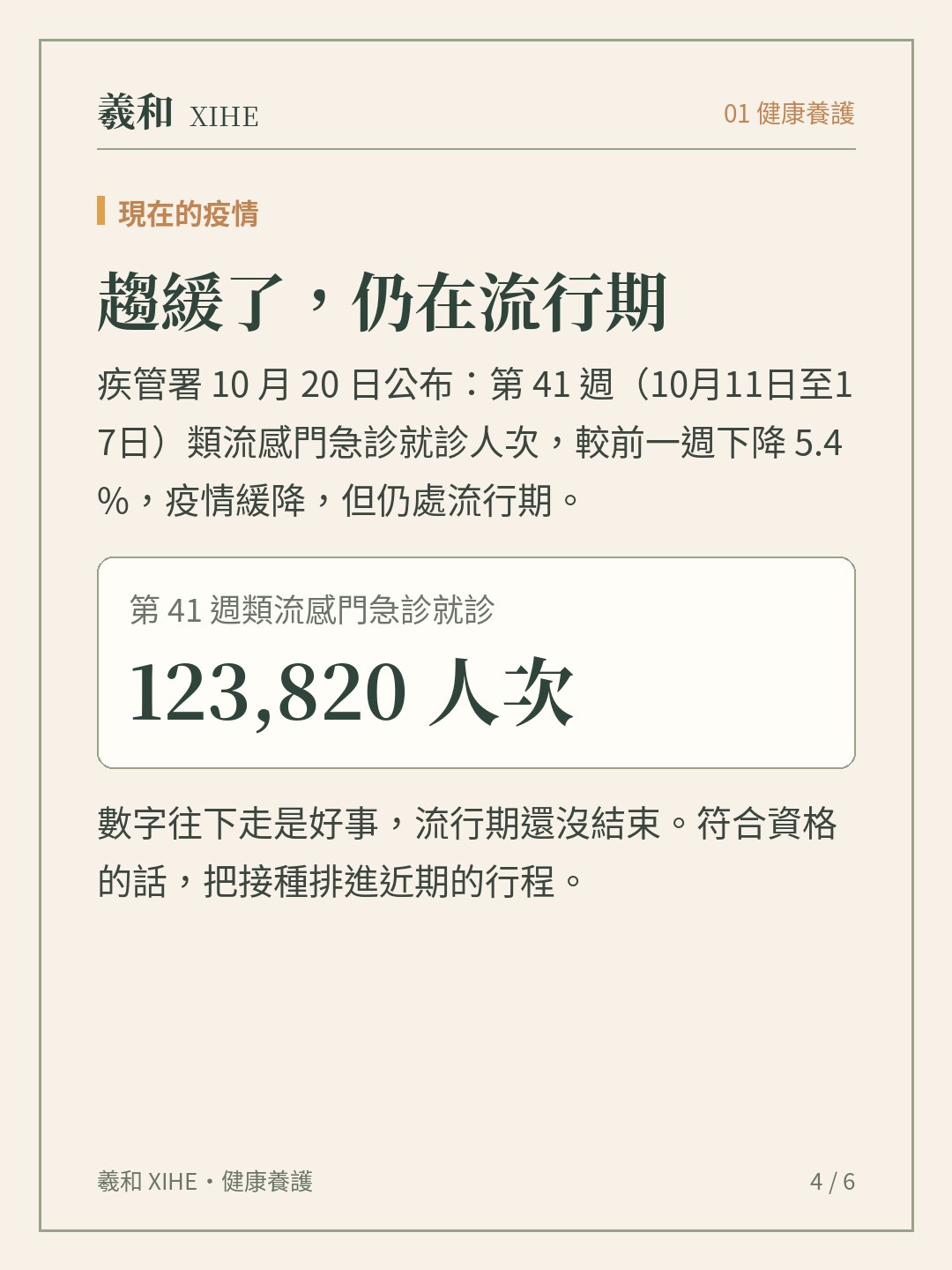
On October 20, 2026, the Taiwan CDC reported that in Week 41 (October 11–17), outpatient and emergency visits for influenza-like illness totaled 123,820, down 5.4% from the previous week. The epidemic is easing, but it remains within the epidemic period.
On the same day, the CDC announced that the expanded eligibility for publicly funded influenza antiviral medication would be extended to November 15, 2026.
The numbers moving down is good news, but the epidemic period is not over, and cooler weather brings the respiratory infection season. If you are eligible, it is worth scheduling your vaccination in the coming weeks.
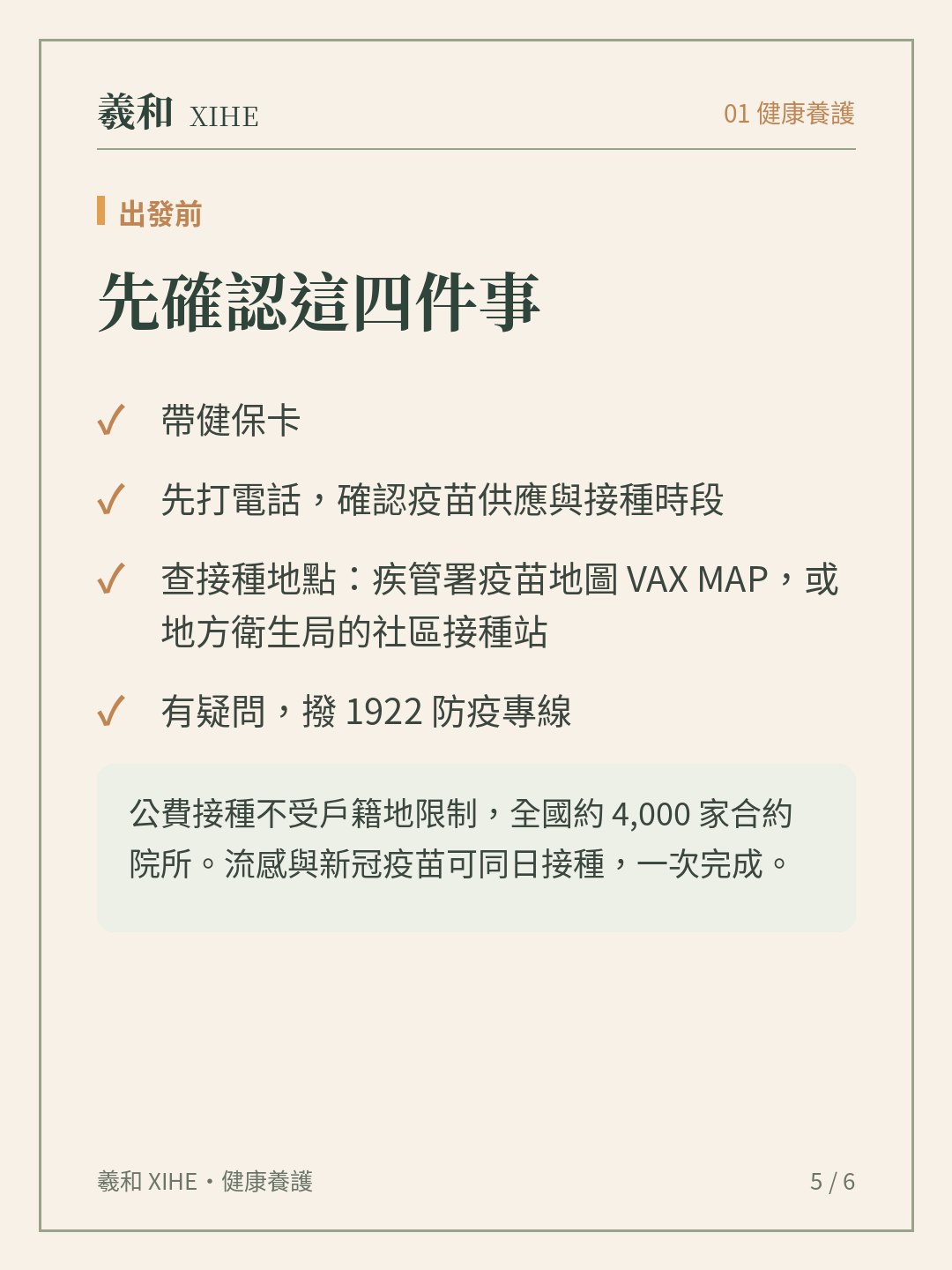
4. Before you go, check these
1. Bring your National Health Insurance card. If you are vaccinated under the Indigenous category (Phase 1, ages 55 to 64), also bring proof of Indigenous status, such as a household registration transcript or household certificate.
2. Call ahead: confirm vaccine availability and vaccination hours with the contracted clinic, or book an appointment, so you do not make a wasted trip.
3. Find a location: the CDC's vaccine map (VAX MAP, https://vaxmap.cdc.gov.tw) lists contracted clinics, and local health departments also run community vaccination stations. Publicly funded vaccination is not restricted by household registration; around 4,000 contracted institutions nationwide provide the service. For questions, call the 1922 hotline.
4. Fees: the vaccine itself is publicly funded; a clinic may charge a registration fee or similar under its rules, so ask in advance.
5. The flu and COVID-19 vaccines can be given on the same day, so eligible people can complete both in one visit; whether to do so can be confirmed with the doctor based on your own condition.
5. A few reminders, before and after
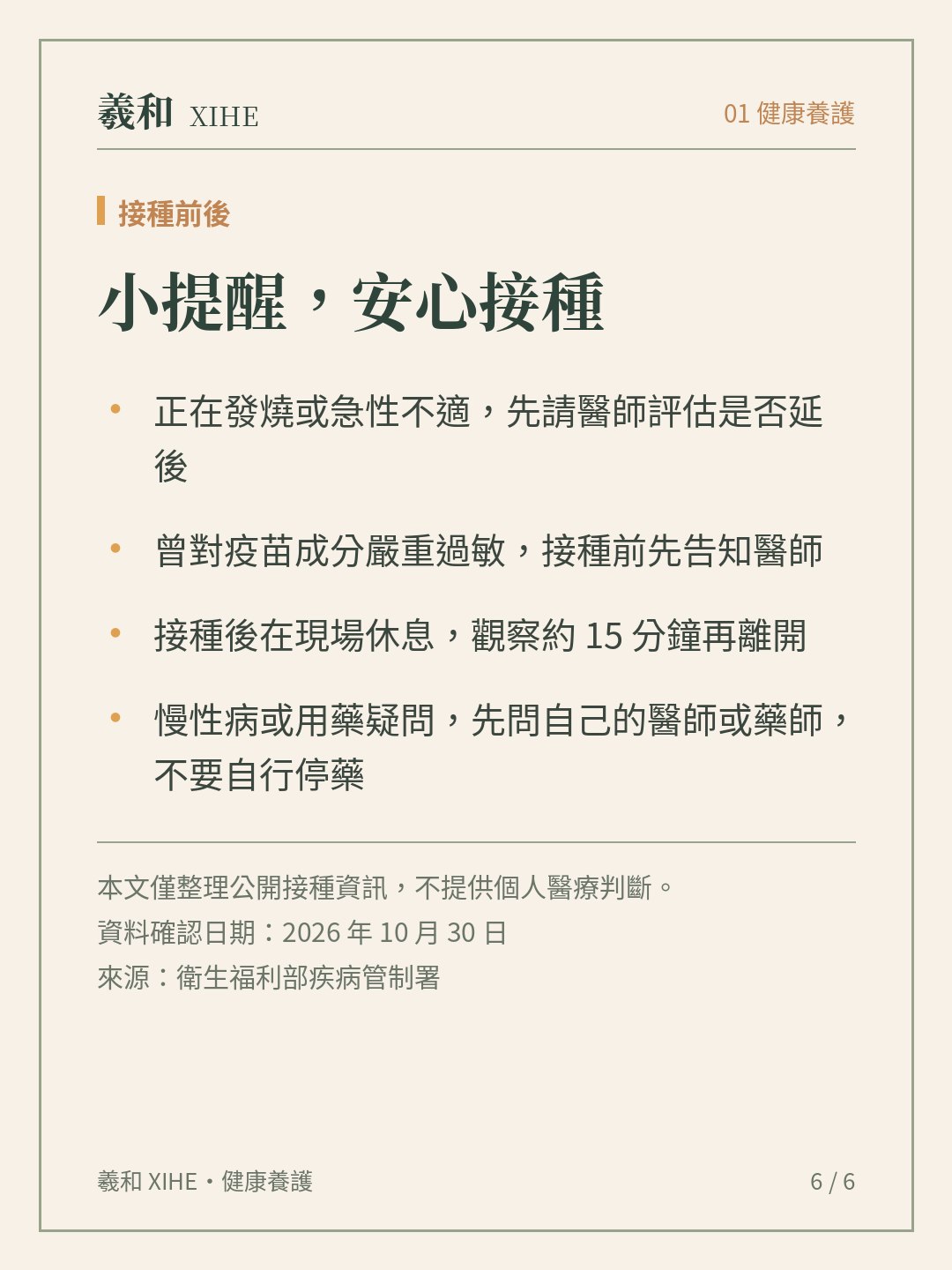
If you have a fever or acute discomfort, let a doctor assess whether to postpone. If you have ever had a severe allergic reaction to a vaccine ingredient, be sure to tell the doctor beforehand. After vaccination, sit and rest at the site and observe for about 15 minutes before leaving; at home, drink water and rest. Readers with chronic conditions or ongoing medication should check vaccination questions with their own doctor or pharmacist, and should not stop medication on their own.
Mark November 2 on your calendar. If you are eligible, find a contracted clinic near home, make one phone call to confirm, and you can arrange your vaccination with peace of mind.
This article only organizes publicly available vaccination information and does not provide personal medical judgment; whether and when to be vaccinated should follow your own condition and a doctor's assessment.
Information confirmed as of: October 30, 2026
Sources: Taiwan Centers for Disease Control statement of October 27, 2026; Taiwan CDC announcement of October 20, 2026 (republished by the Ministry of Health and Welfare); Taiwan CDC 2026 publicly funded influenza and COVID-19 vaccination program notes; CDC vaccine map https://vaxmap.cdc.gov.tw